CPAP Mask Fitting: Your Guide to Finding the Perfect Fit
Getting a CPAP mask that fits properly can make the difference between successful sleep apnea treatment and a frustrating experience that leaves you tempted to quit therapy altogether. If you’ve ever woken up with red marks on your face, dealt with air leaks throughout the night, or felt like you’re fighting against your mask instead of sleeping peacefully, you know exactly what we’re talking about.
The good news? A proper CPAP mask fitting can solve most of these problems, and it’s easier to achieve than you might think.
Why CPAP Mask Fitting Matters
Your CPAP machine can only do its job if the mask creates a proper seal against your face. When your mask doesn’t fit correctly, air escapes instead of keeping your airway open. This means you’re not getting the therapeutic pressure you need, which defeats the entire purpose of CPAP therapy.
Beyond effectiveness, comfort is crucial for long-term success. Studies show that people who find their CPAP equipment comfortable are far more likely to stick with treatment. When you dread putting on your mask each night, it’s only a matter of time before you start skipping nights or giving up entirely.
Understanding Different Mask Styles
Before we dive into fitting tips, it’s important to know that CPAP masks come in several styles, and what works for one person may not work for another:
Nasal masks cover your nose and are popular for people who breathe through their nose during sleep. They’re typically lighter and less intrusive than full-face options.
Full-face masks cover both your nose and mouth, making them ideal if you breathe through your mouth at night or have nasal congestion issues.
Nasal pillows insert directly into your nostrils with minimal facial contact, perfect for people who feel claustrophobic with larger masks or who want to read or wear glasses before bed.
Each style fits differently, so choosing the right type for your sleeping habits and facial structure is the first step toward CPAP success.
Getting the Right Fit: What to Look For
A properly fitted CPAP mask should feel snug but not tight. Many people make the mistake of over-tightening their straps, thinking this will prevent leaks. In reality, excessive tightening often causes more problems, including skin irritation and pressure sores.
Here’s what a good fit feels like: the mask should rest gently against your face with the headgear holding it in position without tension. You should be able to slide one finger under the straps, and the mask shouldn’t leave deep impressions on your skin after use.
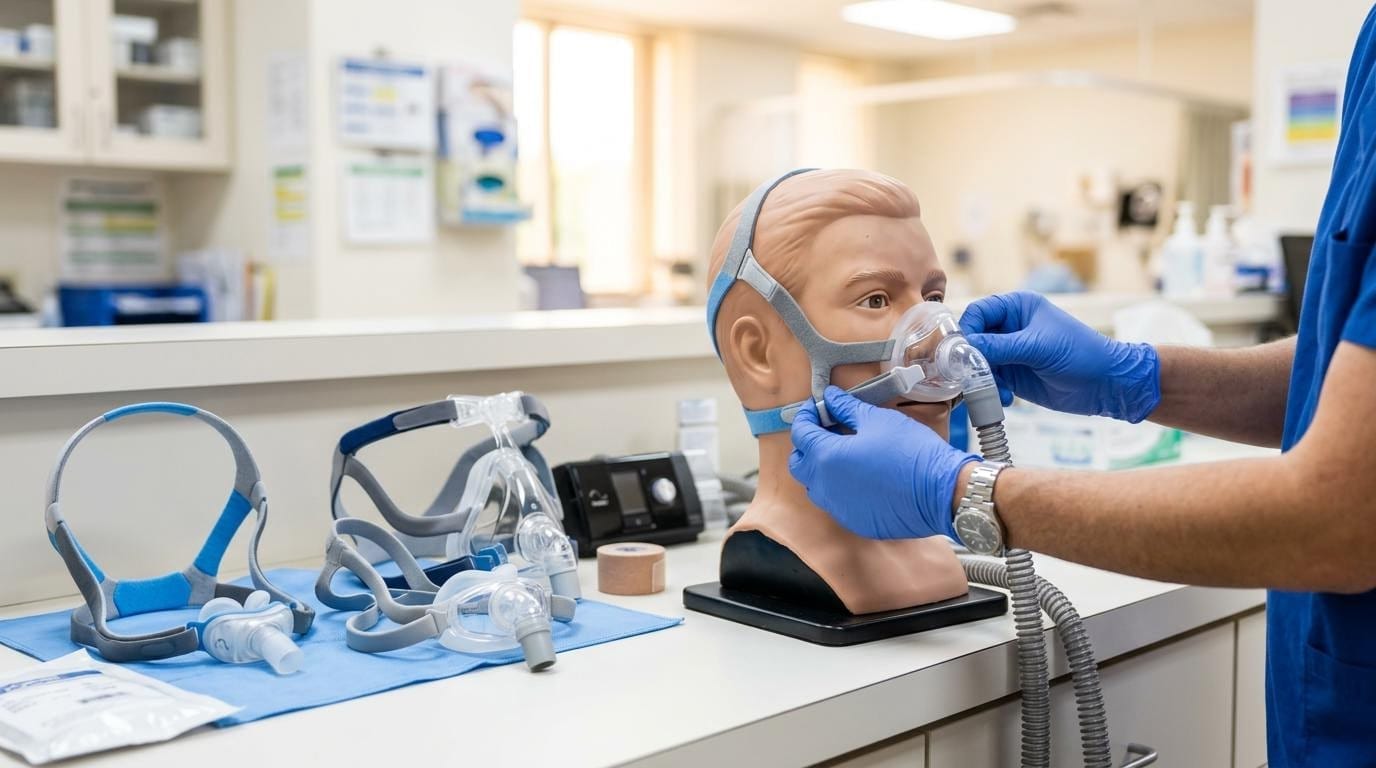
During a professional fitting at East Coast Sleep Clinic, our respiratory therapists will adjust your mask while you’re lying down, since your facial structure changes between sitting and sleeping positions. This ensures the fit works when you actually need it.
Common Fitting Problems and Solutions
Air leaks around the nose bridge are one of the most common complaints. If you’re experiencing this, your mask might be positioned too high or too low. Try adjusting the position on your face before tightening the straps.
Mouth breathing can compromise nasal mask effectiveness. If you wake up with a dry mouth or your bed partner notices air escaping from your mouth, you might need to switch to a full-face mask or consider a chin strap.
Red marks and pressure sores indicate your mask is too tight or the wrong size. Remember, CPAP masks come in multiple sizes within each style. What’s labeled “medium” from one manufacturer may fit differently than another brand’s medium.
The Importance of Professional Fitting
While you can make minor adjustments at home, nothing replaces the value of working with a trained respiratory therapist. At East Coast Sleep Clinic, we offer free CPAP equipment trials, which means you can test different masks and sizes before committing to one.
Professional fitters understand the nuances of facial anatomy and how different mask designs interact with various face shapes. They can spot fitting issues you might not notice and recommend solutions based on your specific sleep position, breathing patterns, and comfort preferences.
When to Reassess Your Fit
Your CPAP mask fit isn’t a one-time thing. Weight changes, dental work, and even aging can affect how your mask fits. If you’ve gained or lost more than 10 pounds, or if you’ve started experiencing leaks or discomfort with a previously comfortable mask, it’s time for a refit.
Mask cushions also wear out over time, typically every 3-6 months. Even small degradations in the cushion material can affect your seal, so regular replacement is part of maintaining proper fit.
Finding the perfect CPAP mask fit takes patience and sometimes a bit of trial and error, but the payoff is worth it. Quality sleep, improved daytime energy, and better overall health make the effort worthwhile. If you’re struggling with your current mask, don’t give up on CPAP therapy—reach out to our team for a professional fitting assessment.