
In-Lab Sleep Study in Riverview, NB — What You're Actually Signing Up For
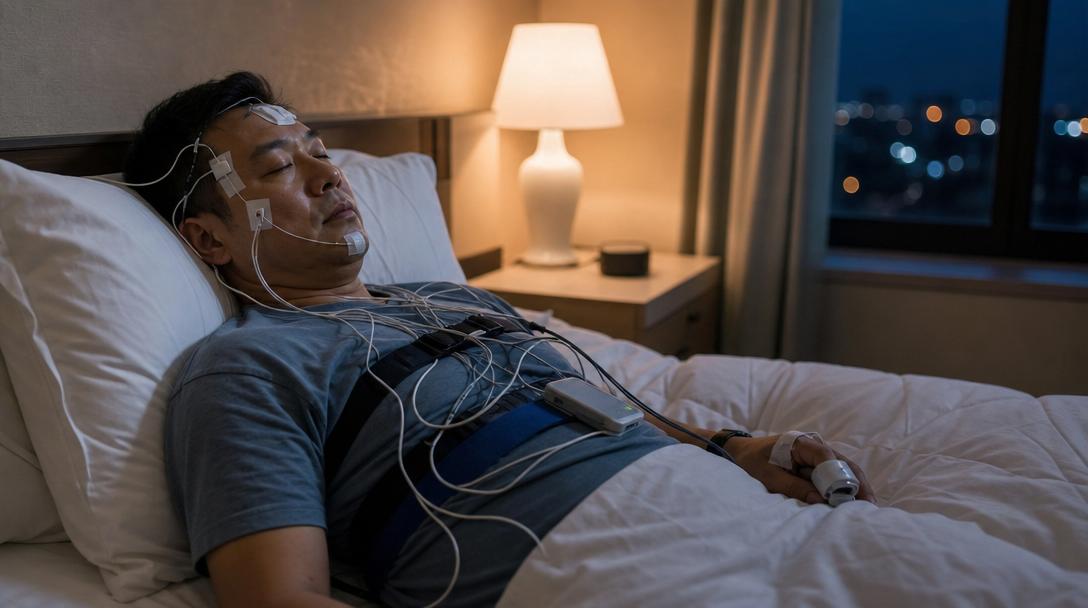
Broken sleep is one of those problems that's easy to minimize until it isn't. For patients making the drive to Riverview from Hillsborough, Sussex, or anywhere along the Coverdale corridor, getting to this point already took longer than it should have.
East Coast Sleep Clinic- Riverview is located at 1-631 Pinewood Road, about ten minutes from downtown Moncton and within easy reach of Dieppe, Salisbury, and the Albert County corridor. For most patients coming through Hillsborough or Hopewell Cape, it's the closest option by a wide margin.
The public system in New Brunswick can take many months to get you in for a Level 1 study. Most patients who end up here are done waiting.
The next question people usually have is whether they really need an in-lab study at all, or whether a home sleep test would do the job.
In-Lab vs. Home Sleep Test: Which One Do You Actually Need?
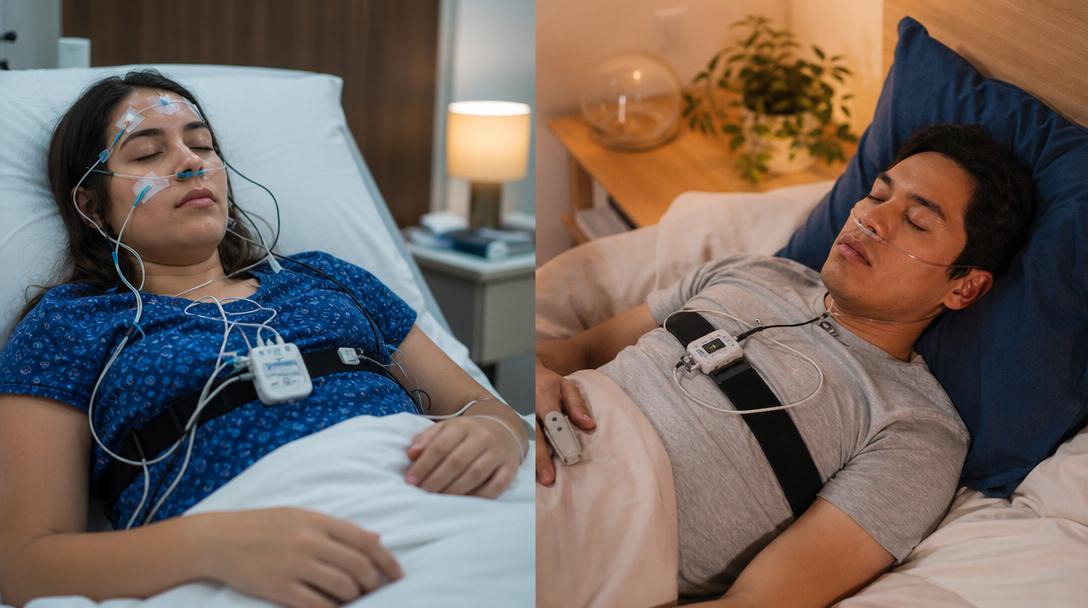
For a lot of patients, this is the question they came in with. The honest answer is that it depends less on preference and more on what your doctor suspects is happening while you sleep.
A home sleep test is a portable device you pick up, use in your own bed, and return the next day. It measures airflow, blood oxygen, and breathing effort. Enough to confirm moderate-to-severe obstructive sleep apnea in an otherwise healthy adult. It costs less, requires no overnight stay, and works well for straightforward cases. If a home test sounds like the right fit for your situation, you can read more about home sleep testing in Riverview or check out this deeper comparison of home vs. in-lab sleep studies.
But it has real limits. A home test won't detect central sleep apnea, periodic limb movements, REM behavior disorder, or anything beyond basic breathing patterns. If you have a cardiac or pulmonary history, serious insomnia alongside your breathing symptoms, or if a previous home test came back inconclusive, an in-lab study is the standard recommendation. Not because it's more expensive. Because it's the only tool that sees everything at once.
For shift workers along the Coverdale corridor who've been running on disrupted sleep for years, or patients coming in from Hillsborough and Albert County who want a definitive answer rather than a repeat test, the in-lab route often makes more sense from the start. Your referring physician will usually drive this decision. If you don't have a referral yet, East Coast Sleep Clinic- Riverview accepts self-referrals. Call (506) 405-0700 and the front desk can get the process started without a doctor's note.
Once you know an in-lab study is the right call, the next thing most people want to understand is what the night itself actually looks like.
What Happens During an In-Lab Sleep Study — Arrival to Discharge
Most people picture a tangle of wires and a stranger watching them sleep. The reality is quieter than that.
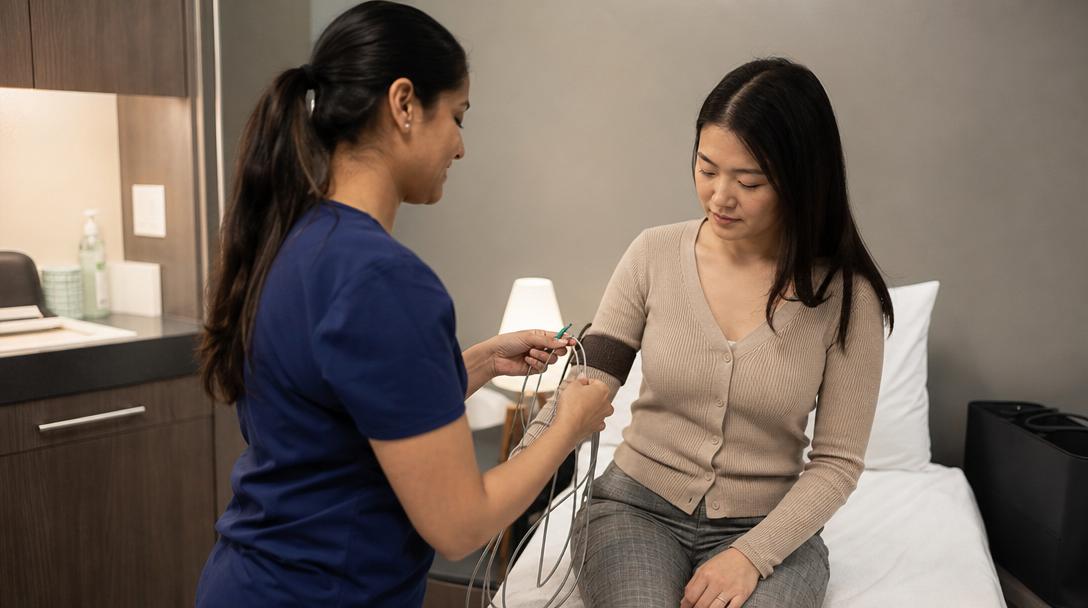
You arrive at East Coast Sleep Clinic- Riverview in the evening, typically between 8 and 9 PM. A technologist shows you to a private room. Think a simple, quiet bedroom, not a hospital bay. You change into your own pajamas. From there, sensor setup takes 45 to 60 minutes. The technologist works methodically: EEG electrodes on the scalp to track brain-wave activity, EOG sensors near the eyes to record eye movement, EMG leads on the chin and legs to catch muscle activity, and ECG electrodes on the chest for heart rhythm. A pulse oximeter on your finger measures blood oxygen throughout the night. A nasal cannula sits just below your nostrils to monitor airflow, and two soft elastic belts around your chest and abdomen measure breathing effort. Nothing is inserted. Nothing is painful.
Once the sensors are in place, you read, watch TV, or scroll your phone until your usual bedtime. The technologist monitors everything from a separate room down the hall and will check in if an adjustment is needed. Otherwise, the night is yours.
Wake-up is around 6 AM. Early enough that Riverview commuters can still make it across the Gunningsville Bridge before the morning rush. Sensor removal takes about ten minutes and leaves no residue worth worrying about. You're out the door with time to stop for coffee before the day starts.
If you have specific questions about the setup before your appointment night, what to expect if you move around a lot, how the room is arranged, whether claustrophobia is going to be a factor, the clinic staff can walk you through those details before you commit to a date.
Two questions come up almost every time once people hear about the setup: will they actually sleep with all of that on, and what should they bring?
The First-Night Effect (And Why Your Results Are Still Reliable)
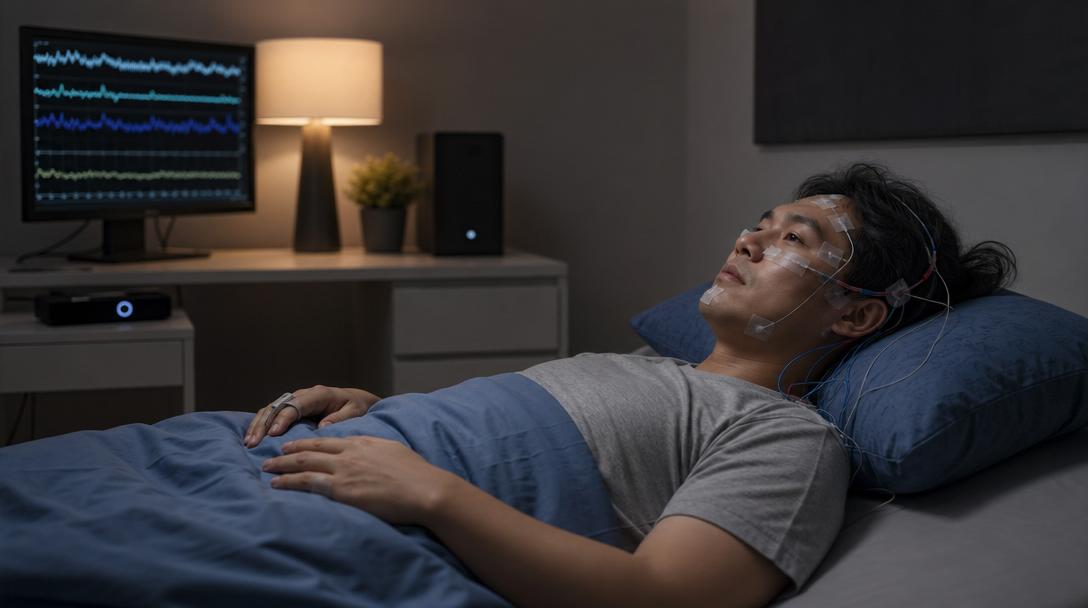
Fair warning: most people don't sleep great their first night in a lab. That's so common it has a name, the first-night effect. You may spend more time in lighter sleep stages, take longer to drift off, and get less REM than you would at home. Completely normal. And more importantly, it doesn't compromise your results.
Here's why. The data that matters most is your apnea-hypopnea index, how many times per hour your airway partially or fully collapses. If that number is high, it shows up whether you slept eight hours or five. Apnea events don't hide because the room is unfamiliar. A patient from Hillsborough who stops breathing forty times a night at home will stop breathing forty times a night in Riverview.
The sleep technologist can also adjust the room temperature, swap in extra blankets, or dim the hallway lighting if that helps you settle. They've seen every variety of restless sleeper.
So to the practical question: what do you actually pack for the night?
What to Bring to Your Sleep Study Appointment
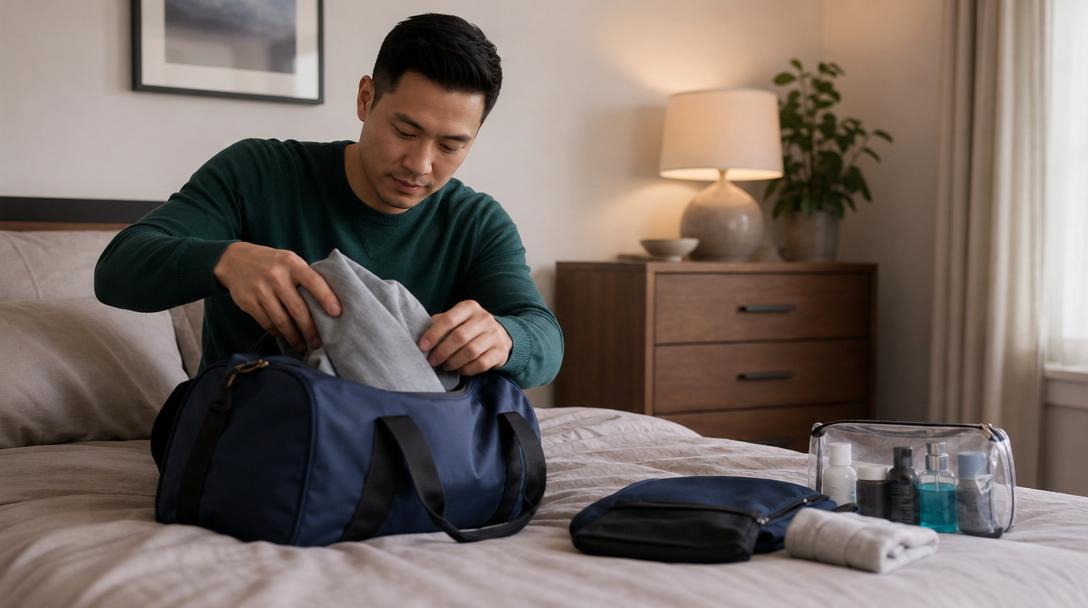
Pack light. This is one night, not a weekend away.
Bring pajamas you'd actually sleep in at home. Loose-fitting, two-piece sets work best because technicians attach sensors to your chest and legs without having to ask you to change again mid-setup. Add your usual toiletries, any medications you take before bed, a list of current medications, and your referral paperwork. If you wear contact lenses, bring a case. A book or tablet helps pass the time before lights-out.
A few things to avoid on the day of your study: skip the afternoon nap, cut off caffeine after lunch, and hold off on alcohol entirely. Heavy hair products (gels, waxes, dry shampoo) interfere with the EEG sensors. Wash your hair and leave it plain. For patients driving in from Hillsborough or the Albert County corridor, plan your last coffee stop accordingly.
That covers what to bring. If you're making the drive in and want to confirm the full list before you leave home, call (506) 405-0700 and the clinic can go over it in a couple of minutes. What happens after the study is where things get interesting, because if the results show sleep apnea, you may not need to come back for a second visit at all.
Same-Night CPAP Titration (Split-Night Studies)
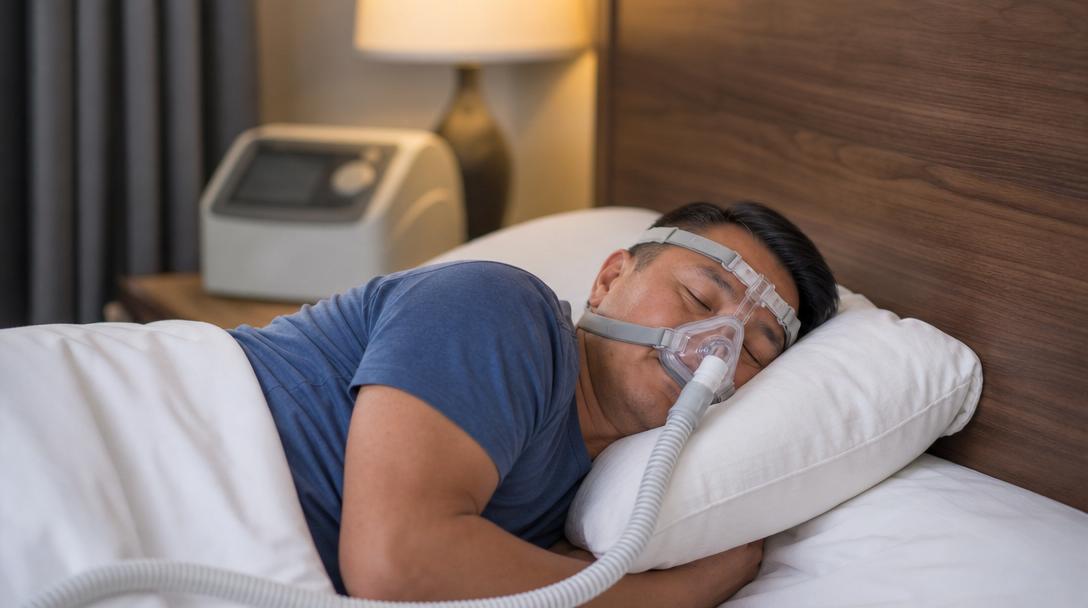
For some patients, the diagnostic portion of the study wraps up before midnight. That changes everything.
If the first half of the night shows clear evidence of moderate-to-severe sleep apnea, the technologist can switch gears on the spot. Instead of ending the study and booking you for a separate CPAP titration night, they'll fit you with a CPAP mask and spend the second half finding the right air pressure to keep your airway open. One visit. Two jobs done. You can read more about how PAP titration studies work if you want the full picture before your appointment.
This is called a split-night study, and for patients driving in from Hillsborough or Albert County, it matters. A second overnight trip isn't always easy to schedule around work shifts or family obligations.
Not everyone qualifies. The diagnostic half needs to show enough apnea events before the cutoff time to make titration worthwhile, and your technologist makes that call based on what the data shows. When it does work, you leave the next morning with a diagnosis and a starting CPAP prescription rather than another appointment on the calendar. If split-night eligibility is something you want to understand before booking, it's worth raising when you call.
What happens after that diagnosis is where most Riverview patients have their real questions.
After the Study: Results, Follow-Up, and Next Steps
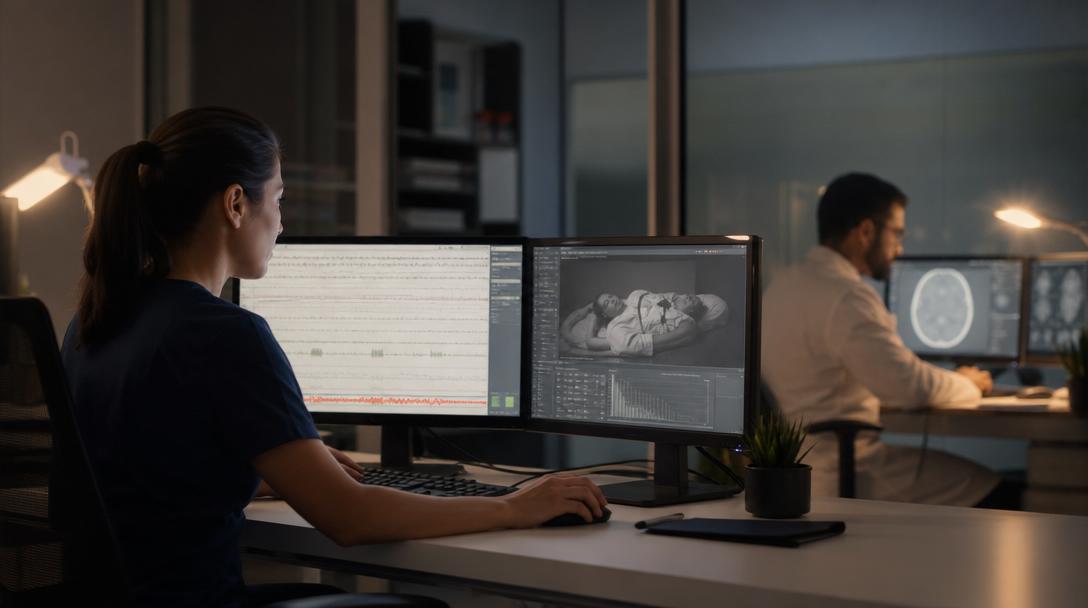
One night of data takes a little time to translate into answers. A registered sleep technologist scores your study first, then a sleep physician reviews and interprets the findings. Most patients receive their results within two to three weeks of their overnight appointment.
From there, East Coast Sleep Clinic- Riverview schedules a follow-up to walk through what the study found. That conversation covers your specific sleep apnea diagnosis, whether that's obstructive sleep apnea, central apnea, upper airway resistance syndrome, periodic limb movements, or something else entirely, and what treatment makes sense for your situation. Not every patient leaves with a CPAP prescription. Oral appliances, positional therapy, and behavioral changes are all on the table depending on what the scoring shows.
For patients who do move forward with CPAP therapy, the clinic handles CPAP mask fitting and equipment in-house. One location, no need to coordinate with a separate supplier across town. That matters if you're coming in from Hillsborough, Sussex, or anywhere along the Albert County corridor.
For most Riverview patients, the last two questions before booking are straightforward: what does this cost, and how fast can I be seen?
Cost, Wait Times, and Booking Your Study in Riverview
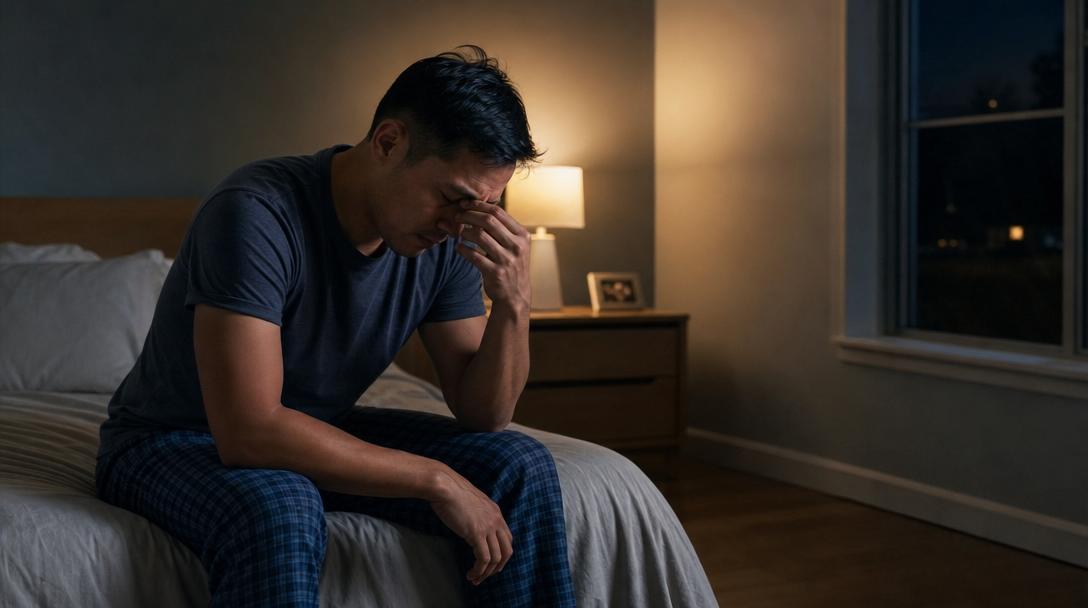
The public system in New Brunswick does cover Level 1 polysomnography. But non-urgent referrals can sit in queue for many months. For someone whose symptoms are affecting their job, their relationship, or their safety behind the wheel on the Coverdale corridor, that wait is real.
Private in-lab studies in Canada run up to around $2,000 out-of-pocket. That number catches people off guard. Many extended health plans cover a portion, sometimes a substantial one, so call your insurer before you book and ask specifically about diagnostic polysomnography. It takes five minutes and could change the math considerably. If you want more background before that call, here's a breakdown of how much a sleep study costs in New Brunswick and what to know about sleep apnea coverage under NB Medicare.
East Coast Sleep Clinic- Riverview accepts both self-referrals and physician referrals. You do not need a doctor's note to get the process started. The clinic sits at 1-631 Pinewood Road, about 10 minutes from downtown Moncton, with straightforward access from Dieppe, Salisbury, Hillsborough, and the Albert County corridor. Patients coming in from Hopewell Cape or Sussex are looking at a single overnight rather than a trip to Saint John or Halifax.
If you've been waiting on the public list for months, you don't have to keep waiting. Call (506) 405-0700 to book or ask about current availability. If calling doesn't work for you right now, the contact form on the clinic's website gets answered the same business day.
Frequently Asked Questions
How long does an in-lab sleep study take?
Plan on arriving between 8 and 9 PM and being discharged around 6 to 7 AM the following morning — roughly ten hours total. That includes 45 to 60 minutes for sensor setup at the start and about ten minutes for removal in the morning. The actual monitored sleep window sits in between.
Will I actually sleep with all the sensors attached?
Most people sleep lighter than they would at home on the first night in a lab setting — this is common enough that sleep researchers call it the first-night effect. It doesn't compromise your results. Apnea events show up whether you sleep five hours or eight, so a shorter or more fragmented night still produces reliable diagnostic data.
Do I need a doctor's referral for a sleep study in Riverview?
A referral from your family physician can help with extended health insurance coverage, but it isn't required to get started. East Coast Sleep Clinic- Riverview accepts self-referrals. Call the clinic directly and the front desk can walk you through your options based on your coverage situation.
How much does a private in-lab sleep study cost in New Brunswick?
A Level 1 polysomnography study in Canada can run up to approximately $2,000 privately, depending on the facility and what the study involves. Many extended health benefit plans cover a portion of this cost. Call East Coast Sleep Clinic- Riverview for current pricing and to find out what documentation your insurer will need.
How soon can I get an in-lab sleep study in Riverview?
Private wait times at East Coast Sleep Clinic- Riverview are typically measured in weeks rather than the many months common in the New Brunswick public system. Availability changes, so the fastest way to get a current timeline is to call the clinic and ask about the next open date.
More Riverview Sleep Services
- East Coast Sleep – Riverview
- Fatigue Evaluation & Daytime Sleepiness Assessment in Riverview, NB
- Sleep Studies & Home Sleep Testing in Riverview, NB
- Medical Equipment Supplier in Riverview, NB
- Nocturnal Oxygen & Long-Term Sleep Monitoring in Riverview, NB
- Portable Sleep Study in Riverview, NB
- Sleep Apnea Diagnosis in Riverview, NB
- Sleep Monitoring for Heart Patients in Riverview, NB
- Sleep Tracking & Long-Term Sleep Monitoring in Riverview, NB
- Travel Sleep Study Services in Riverview, NB
- Upper Airway Resistance Syndrome (UARS) Evaluation in Riverview, NB