
What Sleep Tracking Actually Tells You, and What It Misses

Waking up exhausted after what your watch tells you was eight hours of sleep is one of the more confusing things a wearable can do to you. The data is not wrong. Your Fitbit or Apple Watch just cannot measure the thing that actually matters most.
Consumer wearables are useful. They catch patterns over weeks and months that a single clinical test would never see. But their accuracy has real limits. Research puts wearable sensitivity for sleep stage detection somewhere between 60 and 78 percent. They tend to overestimate light sleep and underestimate deep sleep, inferring brain states from accelerometer data and pulse rather than measuring the electrical activity that actually defines sleep stages. No watch can see what your neurons are doing.
This is not a reason to throw out your wearable data. It is a reason to understand what it is and is not telling you.
Think about the night-shift workers who cross the Gunningsville Bridge every morning after a full shift at the hospital or CN rail yards. Or who wrap up an overnight run at one of the Moncton call centres. A wearable might flag three months of fragmented sleep and low deep-sleep scores for someone on that kind of schedule. What it cannot tell you is whether that fragmentation is circadian disruption from irregular hours, undetected apnea events, or both. The trend is visible. The cause is not.
That gap, between what a wearable signals and what it can confirm, is exactly where clinical sleep tracking starts. If your device has been flagging the same patterns for weeks and you are not sure what to make of them, call East Coast Sleep Clinic- Riverview at (506) 405-0700. A short conversation is usually enough to determine whether what you're seeing is worth investigating clinically.
What Clinical-Grade Sleep Tracking Measures
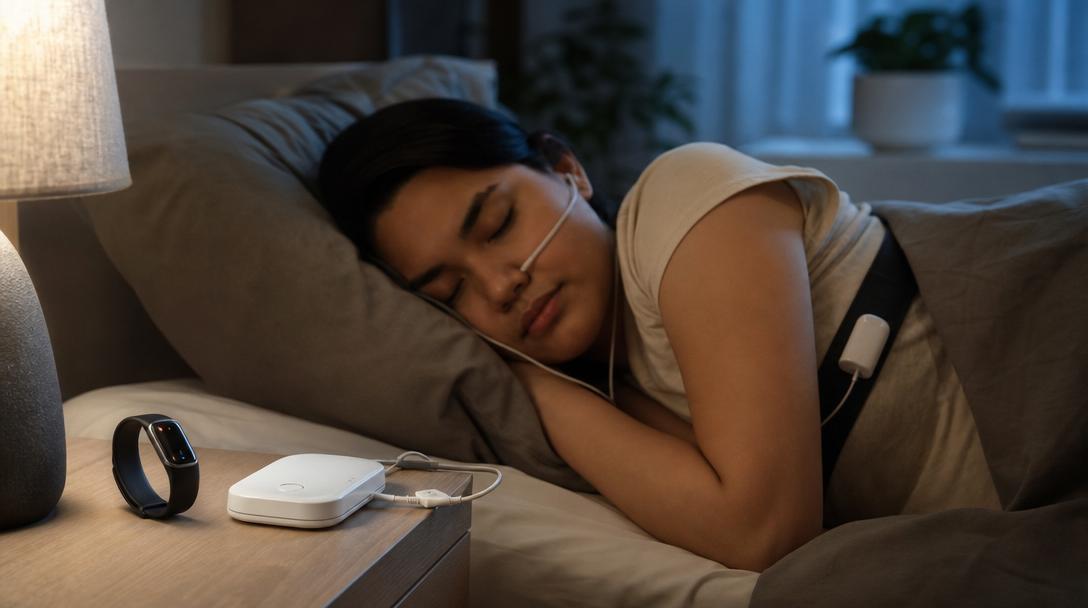
A Fitbit sees you toss and turn. A clinical sleep device sees why.
That is not a knock on consumer wearables. It is a measurement gap. Smartwatches and rings track movement and pulse, and from those two inputs, they estimate sleep stages and flag restless nights. Genuinely useful trend data. What they cannot do is tell you whether your airway collapsed at 2 a.m., how many times your oxygen dropped below 90%, or whether your brain actually cycled through deep sleep or just stayed in a shallow holding pattern all night.
Full polysomnography, the clinical gold standard, captures EEG (brain wave activity), EOG (eye movement), EMG (muscle tone), airflow at the nose and mouth, blood oxygen saturation, heart rhythm, respiratory effort, and body position. Simultaneously, all night. The picture that produces is categorically different from what an accelerometer on your wrist can reconstruct. The clinical sleep monitoring devices used at East Coast Sleep Clinic- Riverview are built around that same gap.
For home-based clinical monitoring, the channel count is narrower but still diagnostic. Airflow, oxygen saturation, heart rate, respiratory effort, and snoring. That is enough to confirm obstructive sleep apnea, central apnea, and oxygen desaturation patterns that a wearable would simply smooth over in a sleep score.
For Riverview residents dealing with shift-work schedules or older homes where bedroom conditions change night to night, that level of detail matters. Trend data from a consumer device can point in the right direction. Clinical measurement confirms whether there is actually a problem worth treating.
Once you know what is being measured, the next question is whether one night of that data is enough to act on.
Why One Night of Data Isn't Enough
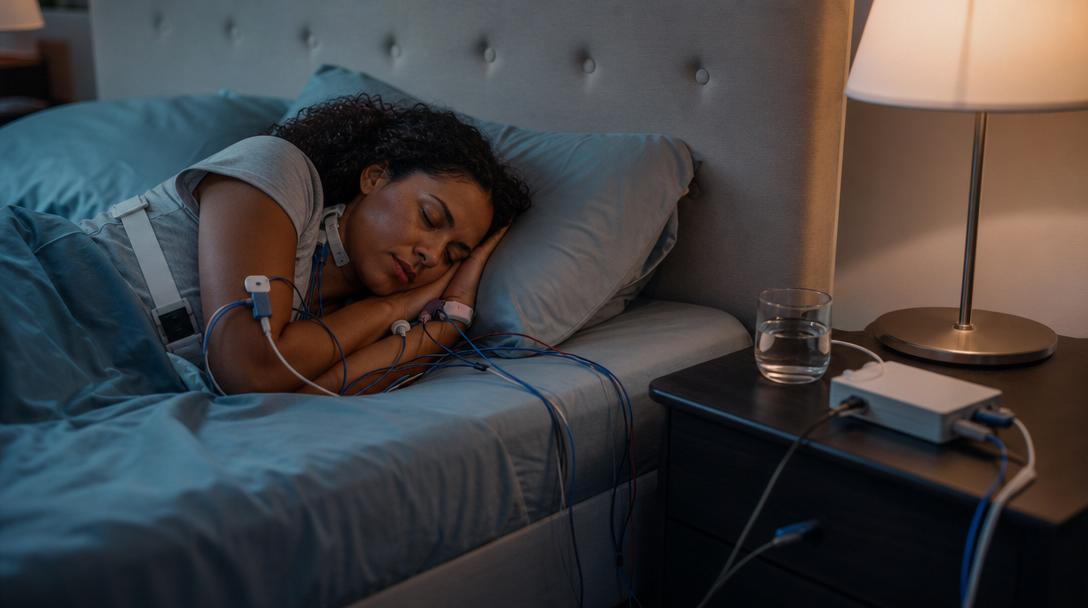
A single sleep study is a snapshot. And like any snapshot, it catches whatever happened to be true at that exact moment, which may have nothing to do with what happens the other 364 nights of the year.
The numbers are harder to ignore than most people expect. Single-night home sleep testing in Riverview and elsewhere misses up to 60% of moderate obstructive sleep apnea cases and roughly 84% of mild ones. A test can come back clean while the problem keeps happening, untreated, night after night.
Part of why this matters in Riverview is that sleep conditions here are not stable from one week to the next. Summers run hot and humid, which affects CPAP humidifier calibration and ramps up seasonal allergy load. Congestion alone can change your airway enough to shift test results. Come January, you are sleeping in a cold room that may or may not hold temperature consistently, particularly in the older housing stock on the Coverdale side of town.
Then there is the schedule factor. A lot of people in Riverview are working irregular shifts: hospital rotations, call centre nights, CN rail runs. Someone on a rotating schedule might sleep reasonably well on a Tuesday after two days off, then show real apnea events on a Saturday after back-to-back overnight shifts. Test on the wrong night, and you miss it entirely.
Multi-night monitoring irons all of that out. It collects data across different seasons, different schedules, and different bedroom conditions until a real pattern emerges.
The data becomes meaningful. But data alone does not tell you what to do next. That takes someone who knows how to read it. If your wearable has been collecting the same troubling patterns for months, call East Coast Sleep Clinic- Riverview at (506) 405-0700 and bring that history with you. It is more useful than most people realize.
How East Coast Sleep Clinic- Riverview Combines Wearable Data with Clinical Monitoring
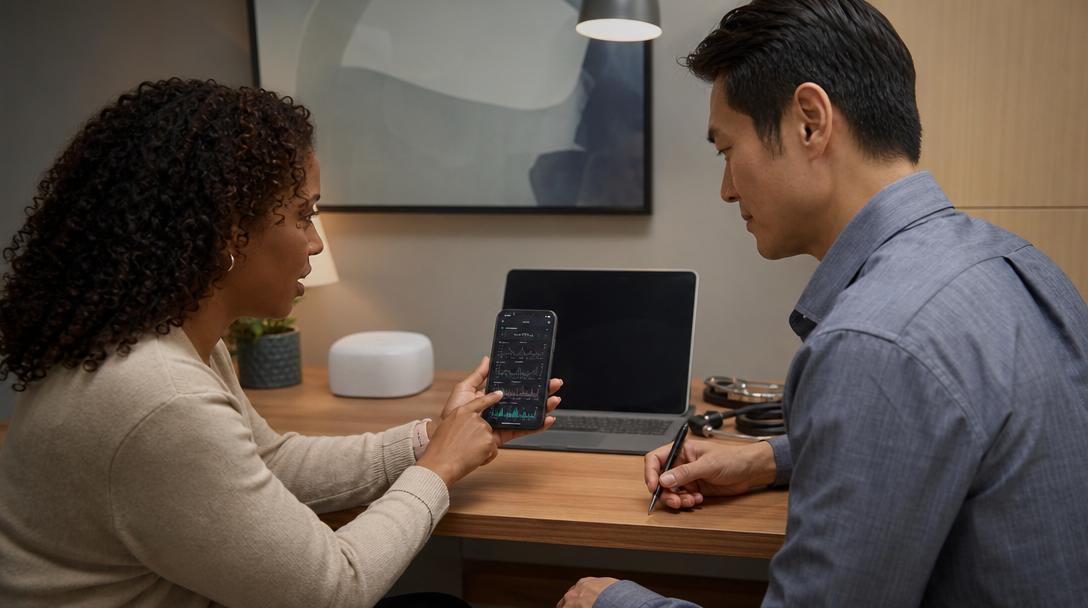
Most people show up to a sleep consultation with months of wearable data on their phone and no idea what to do with it. East Coast Sleep Clinic- Riverview does not discard that data. It uses it as a starting point.
The process runs in three stages. First, a clinician reviews the trends from your smartwatch or fitness tracker during the sleep disorder consultation, not to diagnose from it, but to look for patterns worth investigating. Consistently fragmented sleep, low oxygen saturation flags, elevated overnight heart rate. Those signals help shape what the clinical monitoring is designed to look for.
Second, the clinic fits you with a medical-grade home tracking device set up for multi-night data collection. This is where clinical monitoring separates itself from anything a consumer wearable can do. A ring or watch estimates sleep stages through motion and heart rate. The clinical device measures actual respiratory effort, blood oxygen levels, and airflow, the variables that reveal whether something like sleep apnea is genuinely present or not. Across several nights, it captures the variation that a single-night test would miss entirely. For clients where oxygen patterns are the main concern, nocturnal oxygen monitoring can run as a standalone study or layered on top.
Third, a clinician reads the results against your medical history, your wearable trends, and your reported symptoms together. That combination produces a clinical picture no algorithm can generate on its own.
For Riverview residents, the full process stays on this side of the Petitcodiac. Device fittings, drop-offs, and data downloads all happen at the Riverview clinic. No crossing the Gunningsville Bridge into Moncton for follow-up visits.
What makes this approach work is not the technology. It is who is reading the data at the end.
When to Move from Wearable Tracking to a Clinical Sleep Study

Your wearable data is telling you something. The question is whether you have started paying attention to the right signals.
Some patterns are clear enough to act on. If your watch is flagging low blood oxygen night after night, that is not a calibration issue. It is a pattern worth investigating. Same if you are snoring loudly and someone in the room has watched you stop breathing. Morning headaches that clear up within an hour of waking, blood pressure that has not responded to medication adjustments, or the kind of fatigue that makes the drive back over the Gunningsville Bridge feel genuinely risky. These are not things to keep logging in an app. At that point, you are looking at a sleep apnea diagnosis conversation, not a tracking question.
Fragmented sleep is worth paying attention to on its own. One rough night does not mean much. Weeks of broken sleep charted across your wearable history does.
This matters more in Atlantic Canada than a lot of people realize. Statistics Canada data consistently shows this region carries above-average rates of the main sleep apnea risk factors: shift work schedules, smoking rates, and obesity. If you are a Riverview resident commuting into Moncton for overnight or rotating shifts, your threshold to get tested should probably be lower than average. Not higher. A wearable can track your patterns, but it cannot clear you.
If you want to read more on the testing side before you book, the breakdown of home sleep study versus in-lab testing is a good place to start. If those signals look familiar, the next step is simple. Book a consultation at East Coast Sleep Clinic- Riverview and bring your wearable data with you. That history is more useful than you might think.
Getting Started with Sleep Tracking in Riverview
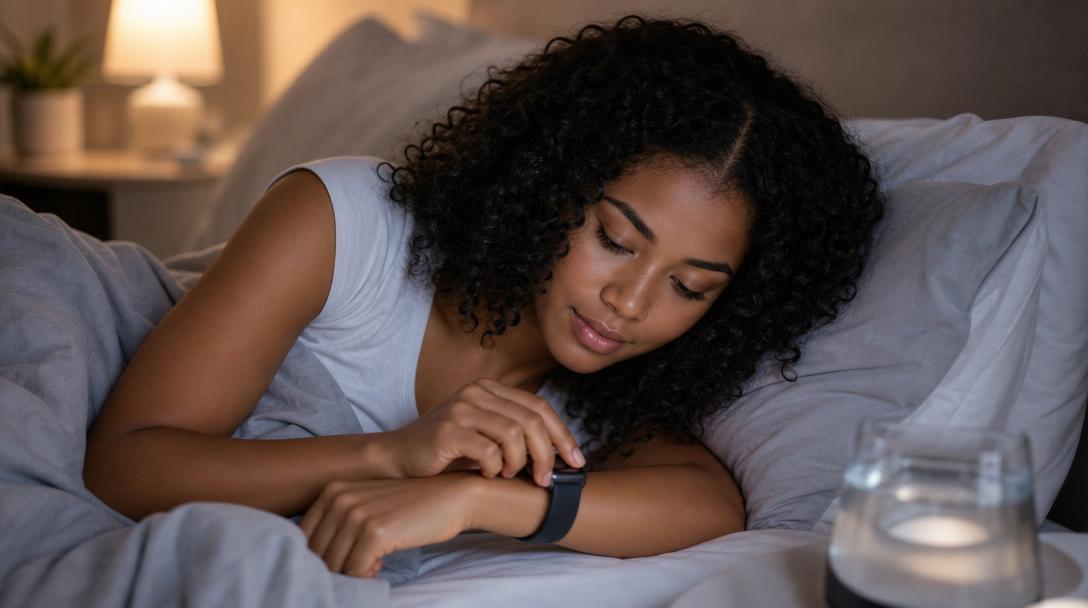
The process is simpler than most people expect.
Call East Coast Sleep Clinic- Riverview to book an initial consultation, and before you come in, export your sleep data from your Fitbit, Apple Watch, or Oura ring. Most apps let you pull a PDF summary or share a weekly trend report. Bring whatever you have. Even a few weeks of data gives the clinician something to work with.
The clinic is on the Riverview side of the river. Residents from Bridgedale, Gunningsville, Riverview Heights, and the Coverdale neighbourhoods do not need to cross the Gunningsville Bridge into Moncton for device fittings, pick-ups, or data downloads. That matters when you are coming in on a weeknight after a shift.
At the first appointment, a clinician reviews your history and your wearable data together. If the patterns suggest something worth confirming, a multi-night monitoring device goes home with you. No overnight stay required. If the picture calls for the full clinical workup instead, an in-lab sleep study can be scheduled from the same appointment.
To get started, call East Coast Sleep Clinic- Riverview directly at (506) 405-0700. If calling is not convenient, the contact form on the website works just as well. Someone will follow up within one business day. The most common questions about sleep tracking and clinical monitoring are below. If something in there sounds familiar, that is probably your signal to call.
Frequently Asked Questions
Can I just use my Apple Watch instead of doing a sleep study?
Your Apple Watch is a useful trend tool, but it cannot diagnose sleep apnea or other sleep disorders. It has no way to measure airflow, blood oxygen drops, or brain-wave activity — the data a clinician needs to make a clinical decision. Wearable data is a good starting point; a clinical study is what confirms whether a problem actually exists.
How many nights does long-term sleep monitoring usually take?
Most clinical home tracking protocols run three to seven consecutive nights. That range is deliberate — it captures the night-to-night variation that a single test misses entirely. For people on irregular schedules or living with seasonal bedroom conditions, multi-night data is what makes the results reliable enough to act on.
Do I need a doctor's referral for sleep tracking at East Coast Sleep Clinic- Riverview?
No referral is needed for an initial consultation. East Coast Sleep Clinic- Riverview can review your wearable data and symptoms directly and help determine whether clinical monitoring is the right next step. If a full clinical sleep study is warranted, the clinic will coordinate with your family doctor from there.
How accurate are Fitbit and Oura Ring sleep stage readings?
Research puts consumer wearable sensitivity for sleep stage detection at roughly 60 to 78 percent compared to polysomnography. The consistent pattern is overestimating light sleep and underestimating deep sleep, because both devices are inferring brain states from movement and pulse rather than measuring electrical activity directly. That makes them reliable for spotting trends over time, not for diagnosing specific sleep disorders.
Will my wearable data actually be useful at the appointment?
Yes. Even imperfect trend data on sleep duration, heart rate variability, restless nights, and overnight oxygen patterns gives the clinician a meaningful starting point. Months of consistent wearable history helps narrow what to look for in clinical monitoring and can reduce the number of nights needed to reach a clear picture. Bring whatever you have.
More Riverview Sleep Services
- East Coast Sleep – Riverview
- Fatigue Evaluation & Daytime Sleepiness Assessment in Riverview, NB
- Sleep Studies & Home Sleep Testing in Riverview, NB
- Medical Equipment Supplier in Riverview, NB
- Nocturnal Oxygen & Long-Term Sleep Monitoring in Riverview, NB
- Portable Sleep Study in Riverview, NB
- Sleep Apnea Diagnosis in Riverview, NB
- Sleep Monitoring for Heart Patients in Riverview, NB
- In-Lab Sleep Study in Riverview, NB
- Travel Sleep Study Services in Riverview, NB
- Upper Airway Resistance Syndrome (UARS) Evaluation in Riverview, NB