What Adaptive Servo-Ventilation (ASV) Therapy Actually Does
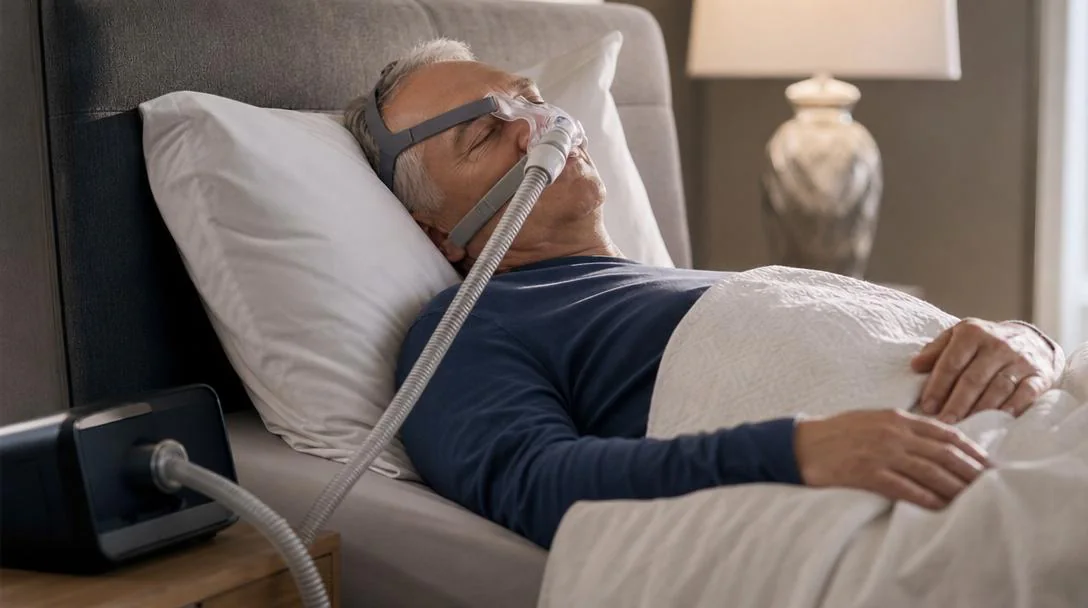
Most sleep apnea machines work by holding your airway open with steady air pressure. ASV does something different: it watches your breathing in real time, breath by breath, and adjusts the moment your brain drops the signal.
That difference matters more than it might sound.
CPAP therapy in Saint John is the right tool for obstructive sleep apnea, blockage-based breathing interruptions that a steady stream of air can prevent. But when the problem is central in origin, meaning the pauses come from the brain rather than the throat, a fixed-pressure machine can actually make things worse. ASV was built specifically for that pattern.
ASV is also a specialty therapy. Most CPAP providers in Saint John carry standard machines for straightforward obstructive apnea. ASV equipment requires different clinical knowledge to set up, titrate, and follow, which is part of why it's harder to find locally.
Understanding what ASV does is straightforward enough. The bigger question for most people is whether their specific diagnosis actually calls for it.
Who Needs ASV: Central, Complex, and Treatment-Emergent Sleep Apnea
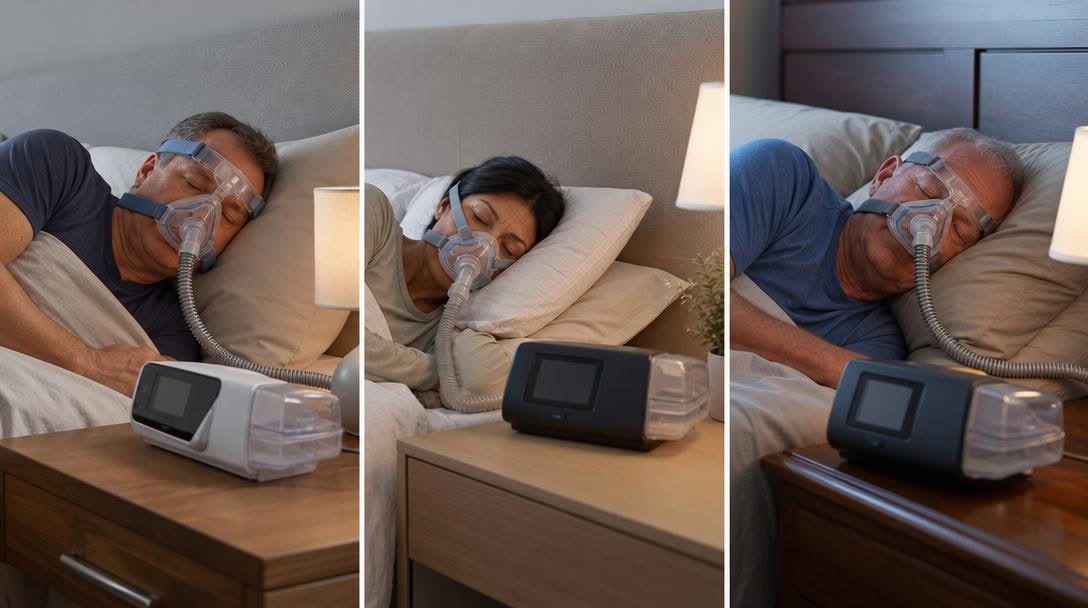
Three distinct patient groups tend to end up prescribed an ASV machine, and knowing which one you fall into matters before anything else happens.
The first is central sleep apnea. Unlike obstructive apnea, where the airway collapses, central apnea happens when the brain simply doesn't send the breathing signal reliably. Standard CPAP pushes air against a blockage that isn't there, so it doesn't help, and in some cases makes things worse.
The second group has complex or mixed sleep apnea: a combination of obstructive and central events showing up in the same study. These patients need a device that can respond to both types of disruption as they shift throughout the night.
The third group surprises a lot of people. Some patients start CPAP for straightforward obstructive apnea, and their follow-up data shows a new problem: treatment-emergent central apnea. The CPAP resolved the obstruction but uncovered central events that weren't visible before. This is more common than most people expect. It's also one of the reasons regular follow-up care matters so much. You can't catch it without looking at the data.
In the Saint John area, many patients in all three groups are first identified at the Saint John Regional Hospital sleep centre, or flagged by a cardiologist managing a related heart condition. They often arrive at our Rothesay clinic with a prescription in hand, ready for hands-on setup and a long-term follow-up plan. If you're at that point, prescription ready and looking for next steps, call East Coast Sleep Clinic – KV at (506) 847-5100 and we'll get you scheduled.
One question almost always comes up next, especially for anyone referred through cardiology: is ASV safe if I have heart problems? That one deserves a direct answer.
Is ASV Safe if You Have Heart Failure? The SERVE-HF Question
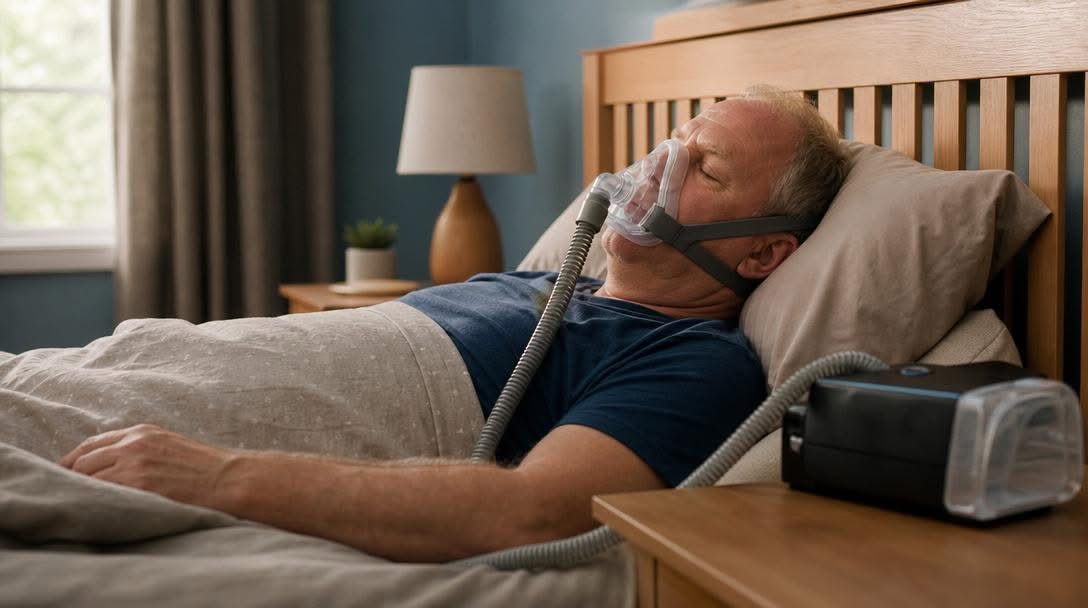
The short answer is: it depends, and getting that answer right matters more than getting a machine quickly.
A large clinical trial called SERVE-HF found that ASV therapy can be harmful for a specific group of patients, those with symptomatic chronic heart failure and a left ventricular ejection fraction at or below 45%. In plain language, that means if your heart is badly weakened and you're experiencing active heart failure symptoms, ASV is not the right fit. The trial was large enough and the signal clear enough that this contraindication is now standard guidance across sleep medicine.
This is exactly why we work closely with the referral team at Saint John Regional Hospital and with local cardiologists before setting anyone up with an ASV machine. Screening matters more than speed.
If a patient arrives with a script and a history of cardiac complications, we want to make sure the right groundwork has been done before we go any further. For patients without symptomatic heart failure and reduced ejection fraction, ASV can be an excellent option. Many people referred to us from Saint John fit this profile, central or complex apnea without the cardiac contraindication, and they tend to respond very well.
Once safety is confirmed, the next practical question is usually about the machine itself. How does ASV compare to the BiPAP that many patients have already tried or heard about?
ASV vs BiPAP: What's the Difference?
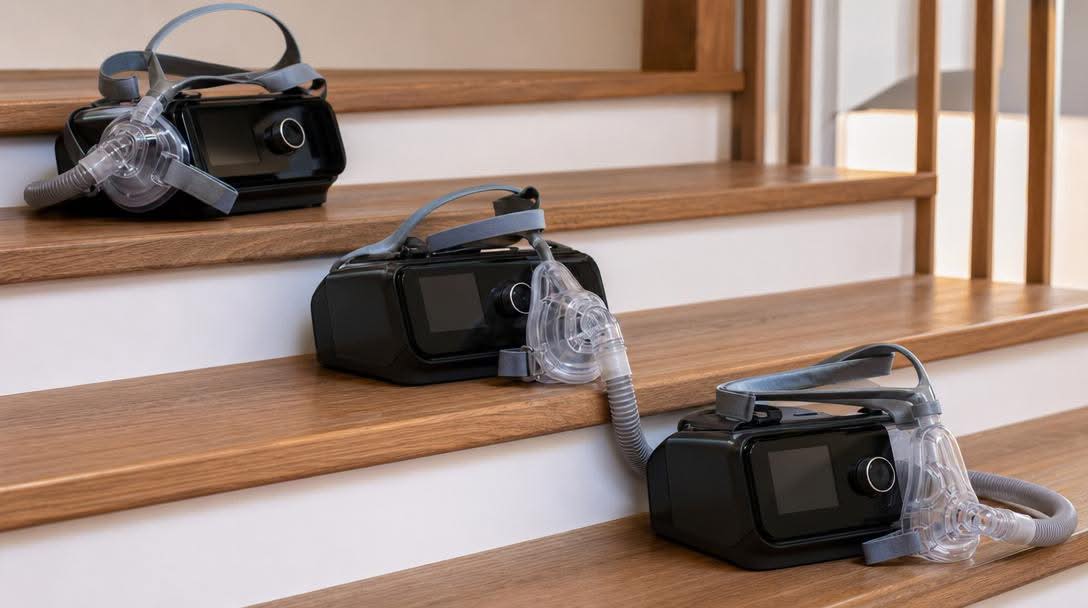
Think of these three therapies as a pressure ladder.
Standard CPAP sits at the bottom, one constant pressure level all night long, which works well when the airway just needs a steady push to stay open. BiPAP adds a second pressure level: one for inhaling, one for exhaling. That makes breathing feel more comfortable for patients who need higher pressures, and it provides a small amount of pressure support when the airway partially collapses.
ASV does everything BiPAP does, and then goes further. Instead of locking in fixed inhale and exhale pressures at setup, the machine reads your breathing pattern several times per second and adjusts on the fly. If your breathing slows, the machine supports it. If it speeds up, the machine backs off. BiPAP can't do this. It delivers the same two pressures whether your breathing is stable or not.
That distinction matters in practice. BiPAP is typically prescribed for straightforward pressure-support needs, high-pressure obstructive apnea, COPD overlap, or patients who simply can't tolerate CPAP. ASV is prescribed when the breathing pattern itself is unstable: central apneas, mixed apneas, or the treatment-emergent central apneas that sometimes develop after a patient starts CPAP.
One more thing: these aren't interchangeable. Switching from BiPAP to ASV means a new titration study, not just swapping machines. The settings are built around different respiratory mechanics entirely.
If you're unsure whether your current prescription is the right machine for what your sleep study found, that's worth a conversation. Call us at (506) 847-5100 and we'll take a look at your diagnostic results together.
Getting Fitted for ASV at Our Rothesay Clinic
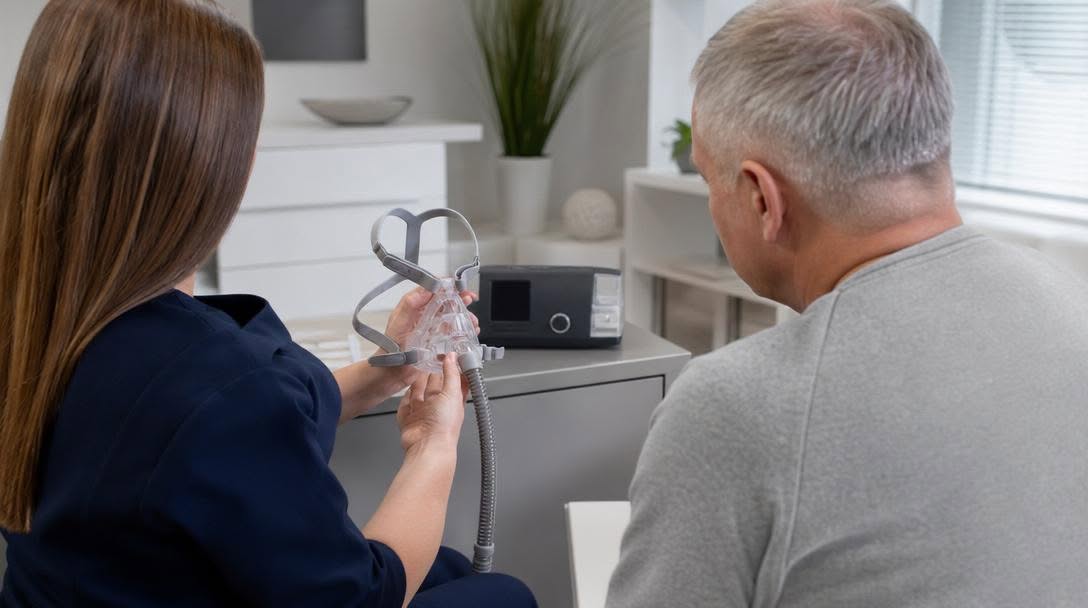
Your first appointment is a working session, not a handoff.
When you arrive at East Coast Sleep Clinic – KV, we start by reviewing your prescription in detail, the referring physician's notes, your diagnostic study results, and any cardiology records relevant to your case. ASV machines have more parameters to configure than a standard CPAP, and we want to understand the full picture before we touch a single setting.
From there, we move to CPAP mask fitting. This matters more with ASV than with conventional CPAP because the pressure delivery is more dynamic. The machine is constantly adjusting, which means a mask that feels fine at low pressure can start leaking at higher ones. We take the time to find the right interface for your face shape and breathing pattern.
Once the machine is fitted, we walk through the humidifier setup with you. This is not optional in Saint John. The Bay of Fundy climate, damp summers and cold wet winters, makes rainout in the tubing a genuine problem. If condensation is pooling in your hose by 3 a.m., you are not going to use the machine. We set the humidifier and, where needed, the tubing temperature, before you leave the clinic.
After your first few nights at home, we pull the data. Most ASV machines upload automatically, and we can also read directly from the SD card. We are looking at your residual events, pressure ranges, leak rates, and how the algorithm is responding. If something is off, we adjust.
Fitting is only the beginning. What separates a good ASV outcome from a poor one is what happens in the weeks after.
Regular Follow-Ups: Why ASV Patients Can't Just 'Set and Forget'
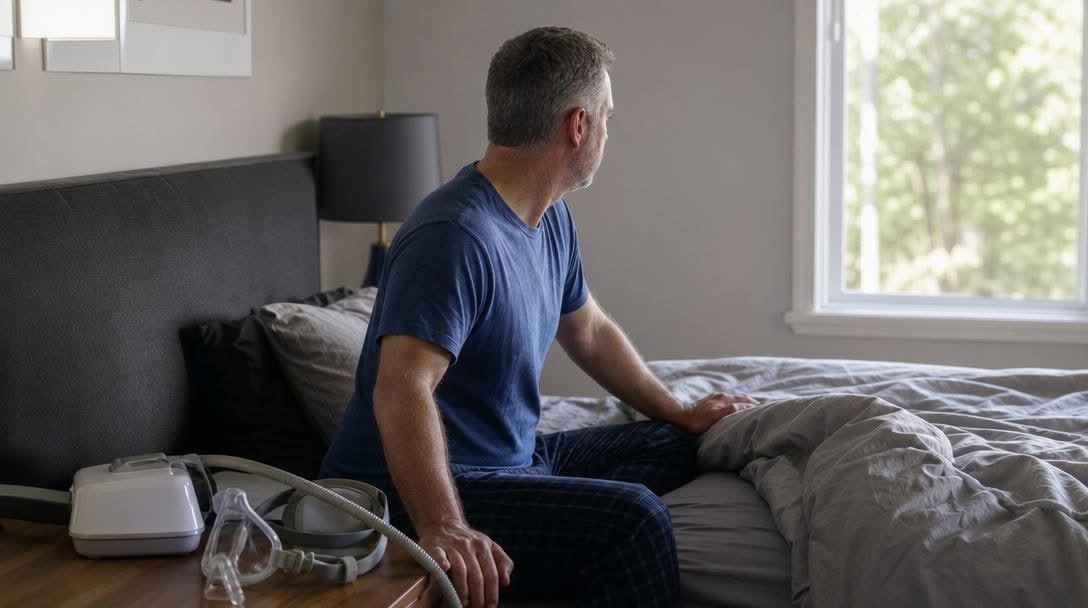
Most people finishing their ASV fitting leave feeling relieved. The hard part is done, the machine is set up, and they are ready to sleep better. The hard part, though, is really just starting.
ASV machines generate detailed data every night. Pressure support levels, central apnea events, leak rates, usage hours. All of it gets recorded, and all of it needs a trained eye reviewing it on a schedule. A setting that worked well in October may need adjusting by January. Saint John's damp winters mean Bay of Fundy humidity builds up in the tubing, and humidifier settings need to be dialed in for the season. That is not something a patient can troubleshoot alone, and it is not something a one-time fitting appointment covers.
At East Coast Sleep Clinic – KV, a follow-up visit means sitting down to go through your machine data together, checking in on how you are actually feeling day to day, and looking at your mask fit and supplies. If your cushion is worn, your filter is due, or your tubing needs replacing, we handle it on the spot. No chasing down a supplier. No waiting on a mail order.
We know the drive from Saint John along Route 100 is not nothing, particularly in winter. We make each visit count, focused, efficient, and worth your time. If you'd like to get a follow-up scheduled or have questions before your first appointment, you're also welcome to reach out through the contact form on our website and we'll be in touch promptly.
That level of ongoing care is less common than it should be. Understanding why most area clinics do not offer it helps explain what to look for when you are choosing a provider.
Why Saint John Patients Come to Rothesay for ASV Therapy

Most downtown Saint John CPAP providers do solid work for straightforward obstructive sleep apnea. ASV is a different category entirely.
It's a specialty machine that most area shops simply do not carry, set up, or service. When a cardiologist at Saint John Regional Hospital or a referring sleep physician identifies a patient who needs ASV, they need somewhere to send that prescription. That is where East Coast Sleep Clinic – KV comes in.
Our Rothesay clinic is roughly 10 to 15 kilometres from uptown Saint John along Route 100, a straightforward drive whether you are coming from West Saint John, the North End, East Saint John, or Millidgeville. For patients who have been working through a complex diagnosis, that short trip along the Rothesay Road is worth it. We stock ASV equipment, handle the setup and titration, and provide the regular follow-up care that keeps therapy on track through every season, including the damp Bay of Fundy winters where humidity settings need attention.
Referring physicians and cardiologists count on us for complex PAP cases because we actually close the loop. We do not hand you a machine and send you home.
For Saint John patients who have an ASV prescription in hand, or whose doctor has mentioned it as a next step, we are ready when you are. Call East Coast Sleep Clinic – KV at (506) 847-5100 to book a consultation.
Frequently Asked Questions
How is ASV different from a regular CPAP machine?
CPAP delivers one fixed pressure all night to hold the airway open — it works well for straightforward obstructive apnea. ASV reads your breathing pattern in real time, breath by breath, and adjusts pressure support on the fly to stabilize irregular breathing, including central apnea events that CPAP can't address. The two machines are built for different problems and aren't interchangeable.
Can I use ASV therapy if I have heart failure?
ASV is contraindicated for patients with symptomatic chronic heart failure and a reduced ejection fraction (LVEF at or below 45%), based on findings from the SERVE-HF clinical trial. We screen carefully and work closely with referring cardiologists and the team at Saint John Regional Hospital before starting anyone on ASV therapy. Getting that groundwork right matters more than getting a machine quickly.
Do I need a new sleep study to start ASV, or can I switch from CPAP?
A titration study is almost always required to set ASV correctly — it is not a simple machine swap. ASV settings are built around different respiratory mechanics than CPAP or BiPAP, so the pressures need to be dialled in specifically for your breathing pattern. We coordinate with your referring physician and the Saint John Regional Hospital sleep centre where needed to make sure that process goes smoothly.
How far is your Rothesay clinic from Saint John?
We're roughly 10 to 15 kilometres from uptown Saint John along Route 100 — about a 15-minute drive from most neighbourhoods in the city. Many of our patients come to us from the East Side, the South End, and the West Side without any trouble. If you're not sure whether the drive works for you, give us a call and we're happy to talk through what a follow-up schedule would look like.
Do you carry ASV masks, tubing, and replacement supplies?
Yes — we stock CPAP therapy and supplies suited for ASV patients, including masks fitted for higher pressure ranges, tubing, filters, and humidifier components. You shouldn't have to hunt down specialty items online or wait weeks for delivery. If you need supplies between appointments, just call us and we'll let you know what we have on hand.
More Saint John Sleep Services
- East Coast Sleep – Saint John
- CPAP Mask Fitting in Saint John, NB
- CPAP Therapy in Saint John, NB
- Home Sleep Testing in Saint John, NB
- Medical Equipment Supplier in Saint John, NB — Sleep & Respiratory Equipment
- Medical Supply Store in Saint John, NB — Sleep & Respiratory Supplies
- Nocturnal Oxygen Monitoring in Saint John, NB
- Sleep Clinic Service Areas in Saint John, New Brunswick
- Sleep Apnea Treatment in Saint John, NB
- Sleep Study in Saint John, NB