CPAP Therapy for Saint John Adults, Just 15 Minutes Away in Rothesay
Most people think getting diagnosed with sleep apnea is the hard part. For Saint John patients who've just come out of a referral or finished an at-home sleep test, the harder work is actually just beginning.
East Coast Sleep Clinic – KV is located in Rothesay, on the Kennebecasis Peninsula, about 10 to 15 km from uptown Saint John via Route 1 or Rothesay Road. Most patients make that drive in 15 to 20 minutes. We see patients from across greater Saint John, including the North End, West Side, East Side, Millidgeville, and out through Quispamsis and Hampton along the KV corridor.
The short drive matters because sleep apnea treatment is not a purchase. It's a relationship, one that involves setup, adjustments, troubleshooting, and regular check-ins over time. That kind of care is what turns a prescribed machine into a treatment that actually works.
If your doctor has referred you for CPAP therapy or you've already completed an at-home sleep test, call us at (506) 847-5100 to book your first appointment. We'll take it from there.
Let's talk about what happens once you start wearing the mask each night.
How CPAP Therapy Works
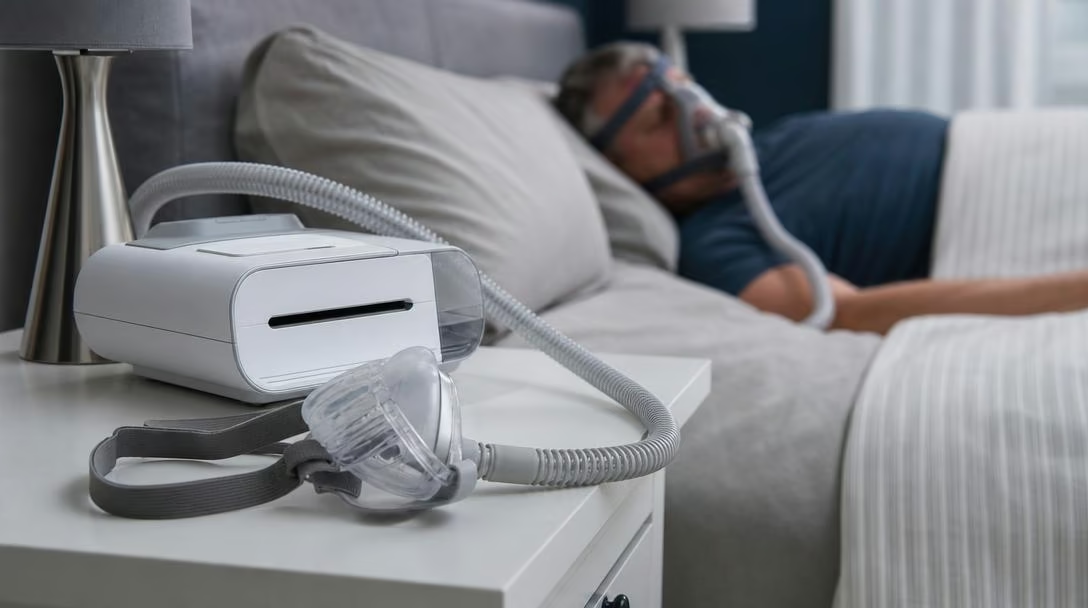
The machine itself is simpler than most people expect. A CPAP (Continuous Positive Airway Pressure) delivers a gentle, steady stream of room air through a mask while you sleep. That air pressure acts like a splint for your airway, holding it open so it can't collapse the way it does during an apnea event. No oxygen. No medication. Just air, moving at a pressure calibrated to your breathing.
When your airway stays open, the apnea events stop. Your body stops jolting itself awake to restart breathing. You move through full sleep cycles.
There are a few variations worth knowing. A standard CPAP delivers one fixed pressure all night. An Auto-CPAP (sometimes called APAP) is smarter. It monitors your breathing and automatically adjusts the pressure up or down as your needs shift through the night. Many patients find Auto-CPAP more comfortable, especially in the first weeks. BiPAP, a third option, delivers different pressures for inhaling and exhaling and is typically prescribed for patients with higher pressure requirements or other respiratory conditions.
For most Saint John patients coming to us after a referral or an at-home sleep test, the starting point is figuring out which device fits your diagnosis — we carry a range of CPAP and Auto-CPAP machines and will match you to the right one at your setup appointment.
Understanding how the machine works is one thing. Knowing what to expect when you walk in for that first session is another.
What Happens at Your CPAP Setup and Titration Appointment

Your first appointment at East Coast Sleep Clinic – KV is not a product handoff. It's the start of a structured therapy process, built around your specific results, whether those came from a sleep study at Saint John Regional Hospital or from at-home sleep testing you completed in your own bed.
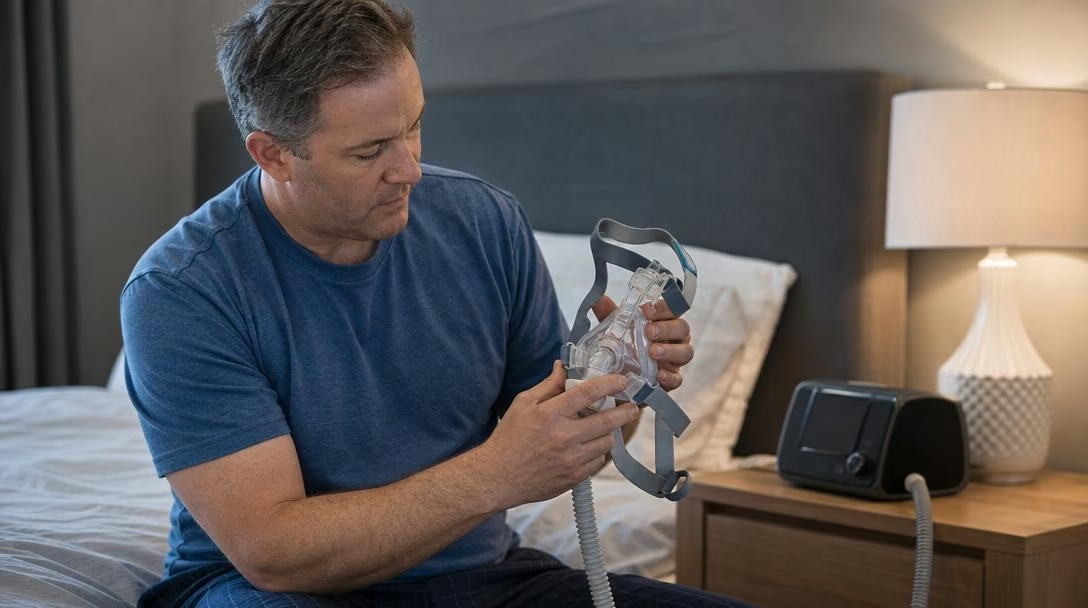
We start with CPAP mask fitting. There's no universal fit, so we work through multiple mask styles (nasal pillows, nasal masks, full-face options) until we find one that seals properly, sits comfortably, and doesn't create pressure points across your nose or cheeks. A mask that fits right on the shelf but leaks at 2 a.m. is useless.
From there, we configure your machine. Pressure settings are programmed from your sleep study data. The humidifier is dialled in carefully, and in Saint John, this matters more than most people expect. The Bay of Fundy climate brings real swings in humidity between seasons. A humidifier set for July is going to feel wrong by January, especially in older North End or West Side homes where bedroom temperatures drop overnight.
Before you leave, we walk you through the first week: what normal adjustment feels like, what's worth calling about, and what the data from your machine will tell us at your next visit.
The setup is just the beginning. What separates a successful CPAP patient from one whose machine ends up in a closet is what happens over the next 30 to 90 days.
If you've been diagnosed and are ready to get started, book your setup appointment with East Coast Sleep Clinic – KV. That first visit is where the real therapy begins.
Regular Follow-Ups: Why Ongoing Care Matters More Than the Machine

A CPAP machine on its own doesn't treat sleep apnea. The therapy does. That distinction matters more than most patients realize when they're first starting out.
At East Coast Sleep Clinic – KV, follow-up appointments are where the real work happens. We review data downloads from your device, tracking hours of use, events per hour, and whether your airway is staying open through the night. The clinical benchmark is four hours a night, 70% of nights. That's the threshold Medavie Blue Cross uses for coverage compliance, and it's the point where patients typically start seeing measurable health improvements. We track that number with you, not after the fact.
Pressure adjustments are common in the first few months. Your airway muscle tone changes as your body adapts, and what worked at setup may need refining at week six or week twelve. Mask leaks, pressure sores along the bridge of the nose, seal problems around the jaw, all of these are fixable. But only if someone is actually looking.
Humidifier settings are another piece that Saint John patients consistently need help with. The Bay of Fundy climate swings hard between damp summers and dry winters, especially in older homes with forced-air heat. Getting that heated humidity dialled in for the season makes the difference between waking up congested and waking up comfortable.
Supply counters don't do any of this. They sell you equipment and wish you well.
We run a program.
Even with that support in place, the first few weeks are still an adjustment. If you'd like to know more before your first visit, our guide on what to expect at your first sleep clinic appointment walks through the process in detail.
How Long Until CPAP Therapy Starts Working?

Honestly? Some people wake up after their first full night on CPAP and feel like a different person. That's not the norm, but it happens.
For most patients, the timeline looks something like this: better sleep quality within the first few nights, a noticeable lift in daytime energy and alertness somewhere between weeks two and four, and longer-term improvements (blood pressure, mood, morning headaches) starting to show up around the one-to-three month mark. The research lines up with what we see in clinic. Compliance matters more than anything else. Patients who consistently hit the 4-hours-a-night, 70%-of-nights standard are the ones who feel the difference fastest.
The first week is often the roughest. That's completely normal. The mask feels strange. The airflow takes some getting used to. Saint John patients adjusting through a damp Bay of Fundy winter have an extra variable, with humidity settings that felt right in October feeling wrong by February in an older North End or West Side home.
That's not a failure. It's information.
The first few weeks are also when a lot of patients hit a wall. The mask feels wrong, the pressure feels off, or they wake up frustrated before they've given the therapy a real chance. Here's how we help with that.
Trouble With the Mask or Pressure? We Adjust. You Don't Quit.

Mask leaks. Pressure sores on the nose bridge. Dry mouth that wakes you up at 2 a.m. A feeling of claustrophobia you weren't expecting. These are the things that send CPAP machines to the back of the closet, not because the therapy doesn't work, but because no one sat down and fixed what was wrong.
Every one of those problems has a solution.
If the pressure feels too forceful on the exhale, we can adjust the ramp settings or turn on EPR (expiratory pressure relief), which softens the pressure at the moment you breathe out. If the mask leaks or leaves red marks by morning, we try a different style or size. Full face, nasal pillow, nasal cradle, there's no single right answer, and finding yours sometimes takes a couple of tries.
For patients in older Saint John homes, especially in the North End and West Side where bedrooms run cold and drafty in the winter, heated humidification isn't optional. It's what keeps the airway from drying out and makes the therapy tolerable through a New Brunswick winter. We walk patients through adjusting those humidity levels as the seasons change, because what works in October usually needs a tweak by February.
We're not here to hand you a machine and wish you luck. We're here to make the therapy actually work for you, for the long term.
If you're already on CPAP and not getting the support you need to push through these early challenges, we'd be glad to see you. Working through exactly this kind of thing is what we do every day.
Once things are running smoothly, the next question most Saint John patients have is about cost and coverage. That's where insurance comes in.
Is CPAP Therapy Covered in New Brunswick?

The short answer: it depends on your insurance, not your province.
NB Medicare does not cover CPAP equipment. No provincial benefits for the machine, the mask, or the supplies. If you're counting on your health card, that won't apply here.
Medavie Blue Cross is a different story. As one of the largest insurers in Atlantic Canada, Medavie covers CPAP and BiPAP equipment for eligible members, but there are a few steps involved before a claim goes through. You'll need a prescription from a physician or nurse practitioner that includes your diagnosis, and pre-approval from Medavie before the equipment is purchased. Skip the pre-approval and the claim will be denied, even if you're fully eligible. Our guide to Medavie Blue Cross CPAP coverage in New Brunswick walks through the full process if you want to review it before your appointment.
This is where we take the paperwork off your plate. At East Coast Sleep Clinic – KV, we've worked through this process with a lot of Saint John patients, from Millidgeville to the West Side and everywhere in between. We know exactly what Medavie needs, what format the prescription should be in, and how to get pre-approval moving without weeks of back and forth. You focus on getting used to your therapy. We handle the claims side.
Private coverage varies, so we'll look at your specific plan together and make sure nothing gets missed. If you're not sure where your coverage stands, call us at (506) 847-5100 before your first visit. We'd rather sort that out upfront than have it slow you down later.
Once your coverage is sorted, the next priority is keeping your equipment in good shape so your therapy keeps delivering results.
CPAP Supplies, Replacement Parts, and Long-Term Care

Your CPAP machine is only as effective as the equipment attached to it. Masks lose their seal as cushions soften and stretch. Filters collect dust and restrict airflow. Tubing degrades over months of nightly use. When any of these components wear down, your therapy quietly stops working as well as it should, and most people don't notice until the fatigue comes back.
We track your supply schedule so you don't have to. Based on manufacturer guidelines and your usage patterns, we'll let you know when it's time to replace your mask cushion, swap out your filters, or refresh your tubing. No guesswork. No "I think this is still okay." Just consistent equipment that does its job.
Saint John patients dealing with heavy winter humidity and drafty bedrooms already have enough working against them on cold nights. Worn-out gear makes that worse. Fresh supplies, properly fitted, make a real difference in how comfortable and how effective your therapy stays through the seasons.
We carry CPAP supplies and replacement parts and CPAP cleaning supplies at our Rothesay clinic. Resupply is part of the follow-up relationship, not a separate errand.
If you've been diagnosed with sleep apnea and you're ready to start CPAP therapy, or you're already on CPAP and looking for a clinic that actually follows up, we're a short drive away.
Start CPAP Therapy With a Clinic That Follows Through

Most people who struggle with CPAP don't have a machine problem. They have a support problem.
The machine is the easy part. What's hard is the first few weeks of adjustment, the mask that doesn't quite fit, the pressure that feels too high at 2 a.m., the mornings where you're not sure if any of this is working. That's where a real follow-up clinic makes the difference.
East Coast Sleep Clinic – KV is located in Rothesay, just 15 to 20 minutes from uptown Saint John via Route 1. We see patients from across the city, including the North End, West Side, East Side, Millidgeville, and everywhere in between.
If you've been diagnosed and you're ready to start, or you're already on CPAP and not getting the results you expected, we'd like to help. Call us at (506) 847-5100 to book your first appointment, or send us a message through the contact form on this page and we'll get back to you within one business day.
Frequently Asked Questions
How does CPAP therapy work?
A CPAP machine delivers a gentle, continuous stream of air through a mask while you sleep. That steady air pressure keeps your airway from collapsing, stopping the apnea events that fragment your sleep. No oxygen, no medication — just calibrated air pressure working quietly through the night so your body can move through full, restorative sleep cycles.
Is CPAP therapy covered by Medavie Blue Cross in New Brunswick?
Yes, in most cases. Medavie Blue Cross typically covers CPAP and BiPAP equipment when a physician or nurse practitioner submits a confirmed diagnosis and pre-approval request. Coverage usually requires ongoing compliance — at least four hours of use per night, 70% of nights. At East Coast Sleep Clinic – KV, we help guide you through the paperwork and track your usage data so you stay on the right side of that threshold.
How long does it take for CPAP therapy to start working?
Some patients notice a difference within the first few nights — less daytime fatigue, fewer headaches, clearer thinking in the morning. Most people feel meaningfully better within two to four weeks. The broader benefits, including improved blood pressure, steadier mood, and sharper focus, typically build over one to three months as your body catches up on the sleep debt it's been carrying.
What if I can't tolerate the CPAP mask?
Mask discomfort is the single most common reason people stop using their CPAP — and it's almost always fixable. At East Coast Sleep Clinic – KV, we work through mask style, fit, pressure ramp, and humidification settings until the setup actually works for you. Quitting because a mask was uncomfortable is not something we let happen without a fight.
How far is East Coast Sleep Clinic – KV from Saint John?
We're about 10 to 15 km from uptown Saint John — roughly a 15 to 20 minute drive via Route 1 or Rothesay Road. We see patients from across greater Saint John, including the North End, West Side, East Side, and Millidgeville, as well as patients further along the KV corridor through Quispamsis and Hampton.
More Saint John Sleep Services
- East Coast Sleep – Saint John
- Adaptive Servo-Ventilation (ASV) Therapy in Saint John, NB
- CPAP Mask Fitting in Saint John, NB
- Home Sleep Testing in Saint John, NB
- Medical Equipment Supplier in Saint John, NB — Sleep & Respiratory Equipment
- Medical Supply Store in Saint John, NB — Sleep & Respiratory Supplies
- Nocturnal Oxygen Monitoring in Saint John, NB
- Sleep Clinic Service Areas in Saint John, New Brunswick
- Sleep Apnea Treatment in Saint John, NB
- Sleep Study in Saint John, NB