What Nocturnal Oxygen Monitoring Actually Measures
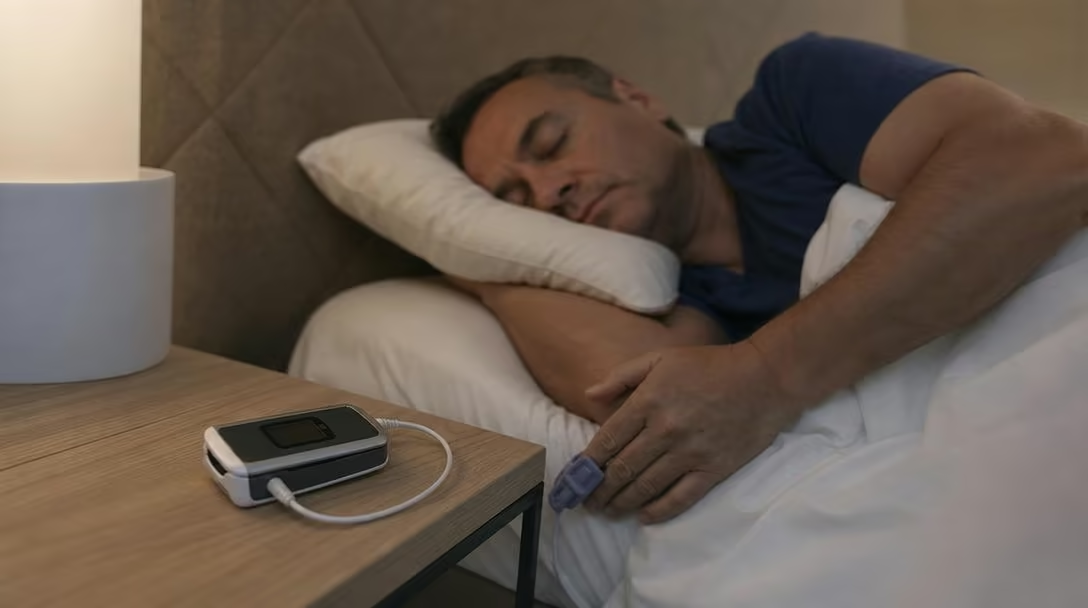
A lot of Saint John patients come to us expecting a complicated process: wires, sensors, an overnight stay in a clinic somewhere. Nocturnal oxygen monitoring is nothing like that. While you sleep, it tracks two things continuously: your blood oxygen saturation (SpO2) and your heart rate.
SpO2 is the number most people have seen on a pulse oximeter at a doctor's office. It's the percentage of hemoglobin in your blood that's carrying oxygen. A healthy reading while awake sits between 95 and 100 percent. During sleep, that number can drop. When it drops repeatedly and by a meaningful amount, those dips are counted and averaged into what's called the oxygen desaturation index, or ODI. The ODI is often the first number a referring physician looks at when reviewing your results.
What overnight oximetry doesn't measure is just as important to understand. It doesn't capture breathing effort, airflow, or the full picture of sleep architecture the way a full at-home sleep test does. It's a focused screening tool, not a full study.
One thing worth knowing for Saint John patients: the city sits essentially at sea level on the Bay of Fundy. Low oxygen readings here aren't explained by altitude. If your SpO2 is dipping at night, something physiological is behind it.
The recorder is small, portable, and requires no technician to administer. That makes it the first test most Saint John physicians reach for, which raises the obvious question of when and why a doctor chooses it. If your physician has already referred you for this test, East Coast Sleep Clinic – KV can get you set up quickly. Call us at (506) 847-5100 and we'll walk you through what to expect.
Why Your Saint John Doctor May Order This Test
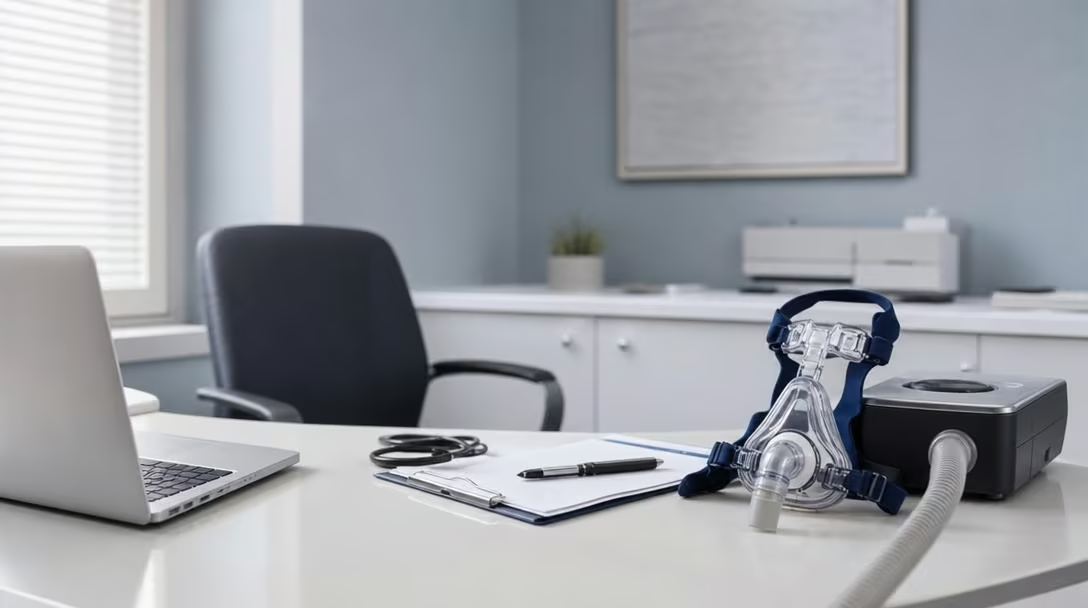
Not every referral starts with a formal sleep complaint. Sometimes a patient mentions they're exhausted despite sleeping eight hours. Sometimes a partner reports gasping sounds in the night. Sometimes a routine appointment turns up borderline daytime oxygen readings and the physician wants a clearer picture before the next visit.
Physicians across the Horizon Health Network, including those referring from Saint John Regional Hospital and the surrounding catchment, tend to reach for nocturnal oximetry in a handful of recognizable scenarios. Heavy snoring with witnessed breath pauses. Daytime SpO2 readings that sit at the low edge of normal. A confirmed diagnosis of COPD or congestive heart failure where nighttime desaturation is a known risk. It's also ordered as a screening step before a full at-home sleep test, when the physician wants early evidence of oxygen disruption before committing a patient to more involved testing.
Saint John's Bay of Fundy winters add a layer worth noting. The cold, damp air and heavy fog that roll in off the water each season can aggravate underlying respiratory conditions and make nocturnal desaturation more noticeable, particularly in patients who already have reduced respiratory reserve.
A patient who manages fine through summer may start struggling by February.
Once the referral is in place, the next thing most people want to know is what the actual test night looks like. What you wear, what you do, and how little disruption is really involved.
What Happens the Night of the Test

Picking up the recorder is the most complicated part of the whole process. And even that takes about ten minutes.
You'll stop by East Coast Sleep Clinic – KV in Rothesay, pick up the small wrist-worn recorder and a finger-clip sensor, and our team will walk you through how to put it on. No wires running to a machine at the foot of the bed. No technician sitting in the next room, no hospital stay. The clip sits on one finger and reads your blood oxygen level and heart rate through the night. The recorder on your wrist logs everything.
From uptown Saint John, Millidgeville, the East Side, KV, Quispamsis, or Hampton, the drive to our clinic runs roughly 10 to 15 km along Route 1. Most patients make the round trip in under an hour across both days.
One thing Saint John patients often appreciate: the recorder doesn't care when you sleep. If you work shifts at Irving Oil, the Port of Saint John, or any of the area's industrial employers, you wear it during whatever hours you actually sleep. Daytime, overnight, rotating shifts. The device records the same way regardless.
Return the recorder the next morning, or the next day after your sleep window. We download the trace and begin reviewing it shortly after. The results tie directly into whether at-home sleep testing is the appropriate next step.
What that trace shows, and what the numbers actually mean for your next steps, is worth understanding before you get the results back. If you have questions before pickup day, our team is happy to talk you through the process. Reach East Coast Sleep Clinic – KV at (506) 847-5100.
Reading the Results — Desaturation, ODI, and What They Signal

The trace comes back as a wavy line: your blood oxygen level, measured breath by breath through the night. For most healthy adults, that line stays between 95% and 100%. When it dips repeatedly below 90%, that's where the conversation starts.
Two numbers matter most. Your baseline SpO2, where your oxygen saturation sits when you're breathing normally. And your ODI, which counts how many times per hour your saturation drops by 4% or more and then recovers. An ODI that tracks closely with how often you stop breathing is one of the clearest early signals of sleep-disordered breathing. Research consistently shows ODI lines up well with the apnea-hypopnea index from full polysomnography. A high ODI isn't just a number. It's pointing in a direction.
Some patients are surprised by how many dips show up on the trace. Housing conditions play a role. In older homes across the Saint John peninsula and West Side, many built before 1960 and most running dry forced-air heat through winter, nasal congestion and mouth-breathing are common through the night. That pattern of partial airway obstruction shows up on the oximetry trace as recurring shallow dips rather than the steep drops seen in severe apnea. Both matter. Both get flagged.
Once the results are in, they tend to point one of two ways: toward a sleep apnea workup, or toward a conversation about home oxygen eligibility under the New Brunswick Respiratory Program.
How Results Connect to the New Brunswick Respiratory Program

A recording that shows repeated drops below 90% saturation does more than flag a sleep problem. It can open the door to publicly funded home oxygen coverage.
The New Brunswick Health Services Respiratory Program covers home oxygen equipment and supplies for eligible residents, but eligibility has to be documented. Overnight oximetry is often the first step in that documentation process. If your trace shows sustained low readings, your physician can use those results to determine whether you meet the program's thresholds and whether further testing is warranted to confirm them.
Those thresholds are specific. The program generally looks for a resting arterial oxygen level (PaO2) at or below 55 mmHg, or at or below 60 mmHg if you have a qualifying condition such as congestive heart failure or pulmonary hypertension. Overnight oximetry alone does not confirm those arterial values. That requires additional testing and physician documentation. What it does is flag the pattern. If your results show your oxygen is dropping during sleep, your care team has a clear, objective starting point for that next conversation.
Worth knowing for Saint John patients: because the region sits essentially at sea level along the Bay of Fundy, low overnight readings cannot be explained away by altitude. What the recorder captures is what is actually happening in your airway and bloodstream.
Nocturnal oximetry is the doorway, not the whole door. If your results point toward CPAP therapy, a referral for home oxygen assessment, or a closer look at an underlying condition, the next step belongs to you and your physician. Our team at East Coast Sleep Clinic – KV can help you understand what that step looks like and what to do from there.
What Happens Next — CPAP Therapy, Home Oxygen, or More Testing

Your results come back. Then what? That depends on what the recorder found, and three paths come up most often.
If your oxygen trace shows recurring dips that look like apnea events, your physician will likely want a more complete picture. At-home sleep testing is usually the next step. It measures airflow, breathing effort, and oxygen levels together, giving enough detail to confirm an obstructive sleep apnea diagnosis and open the door to sleep apnea treatment.
When sleep apnea is confirmed, CPAP therapy is the standard treatment. At East Coast Sleep Clinic – KV, we set up CPAP therapy and supplies right here in Rothesay, and we schedule regular follow-ups to make sure your therapy is doing what it should. One location, one care team, no running between providers.
The third path applies when your oximetry results flag sustained low oxygen that points less toward apnea and more toward an underlying respiratory condition. In that case, your physician may order additional testing to determine whether you qualify for home oxygen equipment and supplies under the New Brunswick Health Services Respiratory Program. The overnight oximetry trace is often the first document in that qualification file.
Saint John patients across Millidgeville, the East Side, and the broader KV area are a short drive from our clinic. Whatever the results show, we're here to walk you through the next step, and to make sure that step happens sooner rather than later.
Book Nocturnal Oxygen Monitoring — Serving Saint John from Rothesay

Most patients across Saint John need only a physician's referral to get started. Once your doctor orders the test, our team at East Coast Sleep Clinic – KV will walk you through pickup, what to expect that night, and exactly where things go from there.
We serve patients from uptown Saint John, Millidgeville, the East Side, the West Side, and the full KV corridor, including Rothesay, Quispamsis, and Hampton. The clinic sits roughly 10 to 15 km east of uptown along Route 1. For most Saint John patients, picking up and returning the recorder is a straightforward trip. No overnight hospital admission, no complicated scheduling.
After the test, we don't hand you a printout and send you home. Regular follow-ups are part of how we work, whether the results point toward CPAP therapy and supplies, supplemental oxygen, or further assessment.
Saint John patients are never more than about 15 minutes from our Rothesay clinic, and we're ready to move quickly once your referral comes in. Call East Coast Sleep Clinic – KV at (506) 847-5100 when you're ready to get started, or fill out the contact form on this page and we'll be in touch.
Frequently Asked Questions
What does overnight oximetry measure?
Overnight oximetry continuously tracks your blood oxygen saturation (SpO2) and heart rate throughout your sleep. Those readings are used to calculate your oxygen desaturation index (ODI), which counts how often your oxygen level dips by 4% or more per hour. That number is often the first thing your referring physician looks at when reviewing results.
Could this test determine whether I need overnight oxygen?
That is exactly one of the things it helps answer. Persistent low SpO2 overnight may point toward home oxygen eligibility under the New Brunswick Respiratory Program, but final qualification requires further testing and physician review. The nocturnal oxygen monitoring results give your doctor the evidence they need to take that next step.
Is nocturnal oxygen monitoring the same as an at-home sleep test?
No — they measure different things. Nocturnal oxygen monitoring tracks oxygen saturation and heart rate only. An at-home sleep test also records airflow and breathing effort, which is what allows a formal sleep apnea diagnosis to be made. Oximetry is often the first step; an at-home sleep test may follow depending on your results.
Do I need a doctor's referral to book nocturnal oxygen monitoring in Saint John?
Yes. The test is physician-ordered, typically by a family doctor, respirologist, or specialist within the Horizon Health Network, including those referring from Saint John Regional Hospital and the surrounding catchment. Once your referral is in place, our team at East Coast Sleep Clinic – KV can get you set up quickly.
What if I work shifts and sleep during the day?
The recorder is portable and battery-powered, so it works whenever you sleep — day or night. Shift workers at Irving Oil, the Port of Saint John, or other area industrial employers wear the device during their normal sleep hours and return it afterward. The recording process is exactly the same regardless of when you sleep.
More Saint John Sleep Services
- East Coast Sleep – Saint John
- Adaptive Servo-Ventilation (ASV) Therapy in Saint John, NB
- CPAP Mask Fitting in Saint John, NB
- CPAP Therapy in Saint John, NB
- Home Sleep Testing in Saint John, NB
- Medical Equipment Supplier in Saint John, NB — Sleep & Respiratory Equipment
- Medical Supply Store in Saint John, NB — Sleep & Respiratory Supplies
- Sleep Clinic Service Areas in Saint John, New Brunswick
- Sleep Apnea Treatment in Saint John, NB
- Sleep Study in Saint John, NB