Overnight Oximetry Without the Drive to Moncton or Saint John
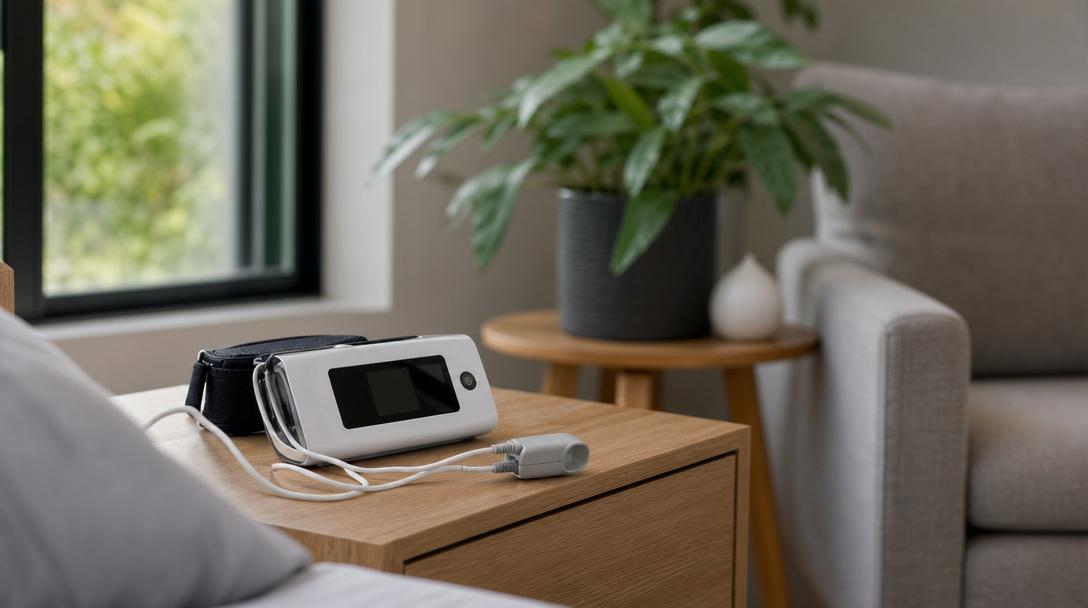
A referral for nocturnal oxygen monitoring is stressful enough without a two-hour round trip attached to it. Your doctor at the Sussex Health Centre wrote that order so you could get answers, not so you could spend a morning on the Trans-Canada.
East Coast Sleep Clinic – Sussex offers overnight oximetry right here on Main Street, minutes from Route 1 and Route 2. Clients coming in from Norton, Sussex Corner, Apohaqui, and Penobsquis are all within a short drive. Moncton is roughly 80 km away. Saint John is about 72 km in the other direction. Neither should be your only option for a test you can have done close to home.
Kings County runs on early mornings and long shifts. We built this service for people who can't afford to lose a workday to a round trip that shouldn't be necessary. If you have a referral in hand, call East Coast Sleep Clinic – Sussex at (506) 434-7667 and we'll get you scheduled.
Once you know where to go, the next natural question is what the test actually involves.
What Is Nocturnal Oxygen Monitoring?
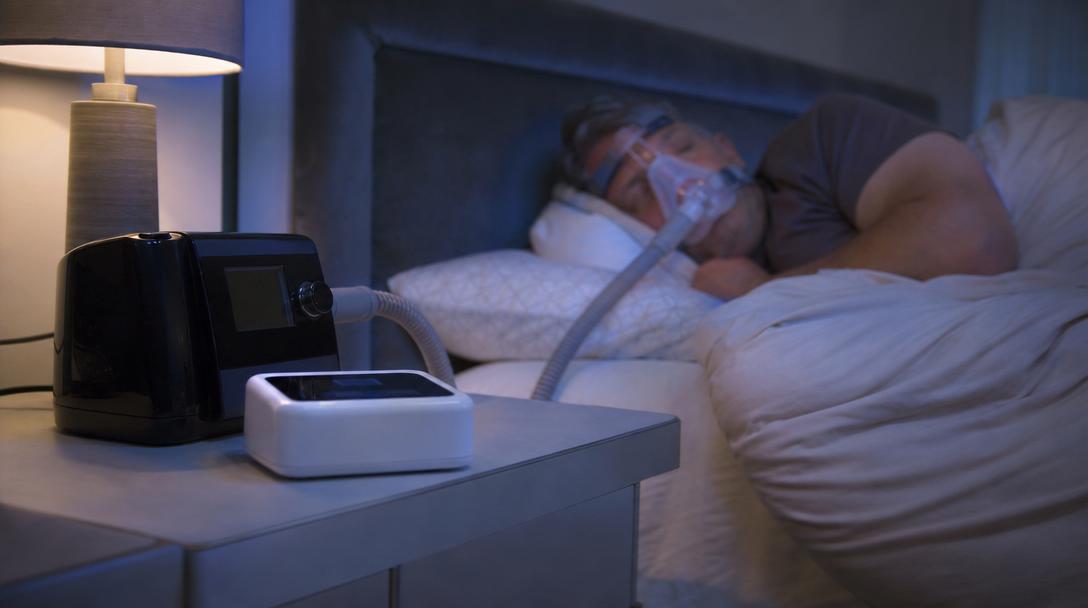
Think of it as a quiet observer that sits on your fingertip while you sleep. Nocturnal oxygen monitoring, also called overnight pulse oximetry, uses a small clip-on sensor to track two things all night: your blood oxygen saturation (SpO2) and your heart rate. No wires across your chest, no technician in the room, no clinic stay.
The sensor records every dip and recovery in your oxygen levels from the time you fall asleep to the time you wake up. Your results are then summarized using a value called the Oxygen Desaturation Index, or ODI, which counts how many times per hour your SpO2 dropped by four percent or more below your baseline. That single number tells your referring physician a great deal about what's happening in your airway overnight.
To be clear about what this test is not: overnight oximetry is a screening tool, not a full sleep study. A polysomnogram, the gold-standard overnight test done at a hospital lab, measures brain waves, eye movement, muscle activity, and breathing effort all at once. Oximetry measures only oxygen and heart rate. For many people referred through the Sussex Health Centre or a Kings County family practice, oximetry is the logical first step. Faster to arrange, easier to complete, and often enough on its own to open the next door.
What those results actually tell you, and why the numbers matter, is where we'll go next.
What SpO2 Levels and Desaturation Numbers Mean
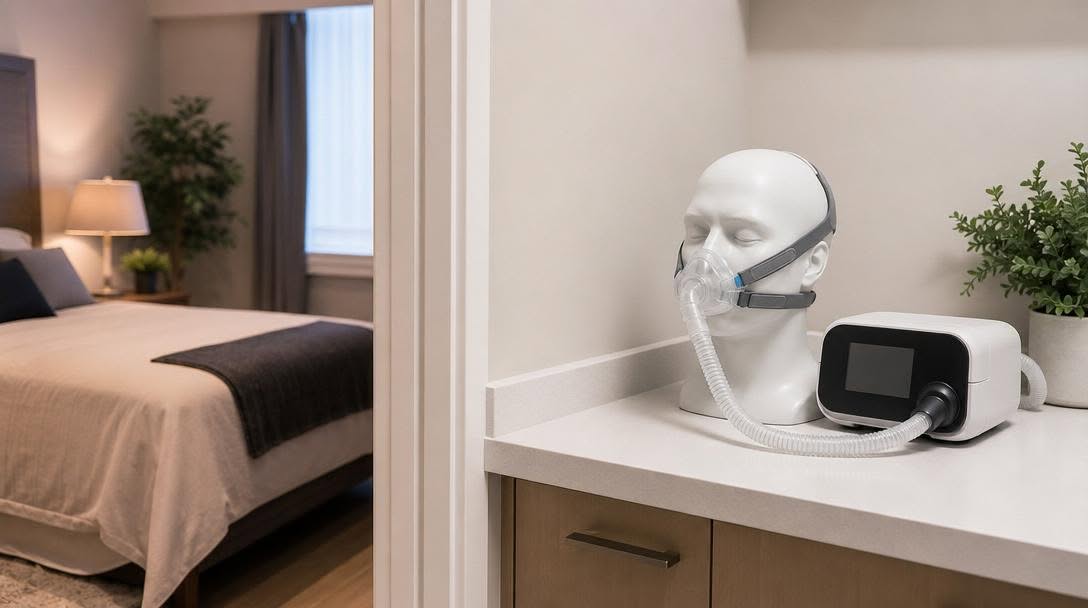
Healthy blood oxygen sits between 95% and 100% while you sleep. When it dips below that range repeatedly through the night, your body is working harder than it should, and those dips leave a record.
The number your physician pays closest attention to is SpO2, which stands for oxygen saturation. A single brief dip isn't necessarily a concern. What matters is how often your levels drop, how far they fall, and how long they stay low. The oxygen desaturation index, or ODI, captures this by counting how many times per hour your SpO2 falls by 4% or more.
An ODI under 5 is generally considered normal. Readings in the 5 to 14 range suggest mild disruption. Moderate falls between 15 and 29, and anything at 30 or above points toward severe nocturnal desaturation, the kind that warrants prompt follow-up.
For clients in New Brunswick who may qualify for a home oxygen program, there's a specific provincial threshold: SpO2 below 88% for more than 30% of a minimum four-hour overnight recording. That benchmark matters in a practical way. Without a documented study showing those numbers, an application for home oxygen support won't move forward. Many clients in the Sussex and Kings County area first learn this when their family doctor writes the referral, and suddenly the test goes from abstract to urgent.
You don't need to memorize any of this before your appointment. Your referring physician reviews the full report and explains what the results mean for your next step. Your job is simply to get the study done. If you have a referral and aren't sure what happens from here, East Coast Sleep Clinic – Sussex can walk you through it before you even come in.
How the Test Works at Our Sussex Clinic
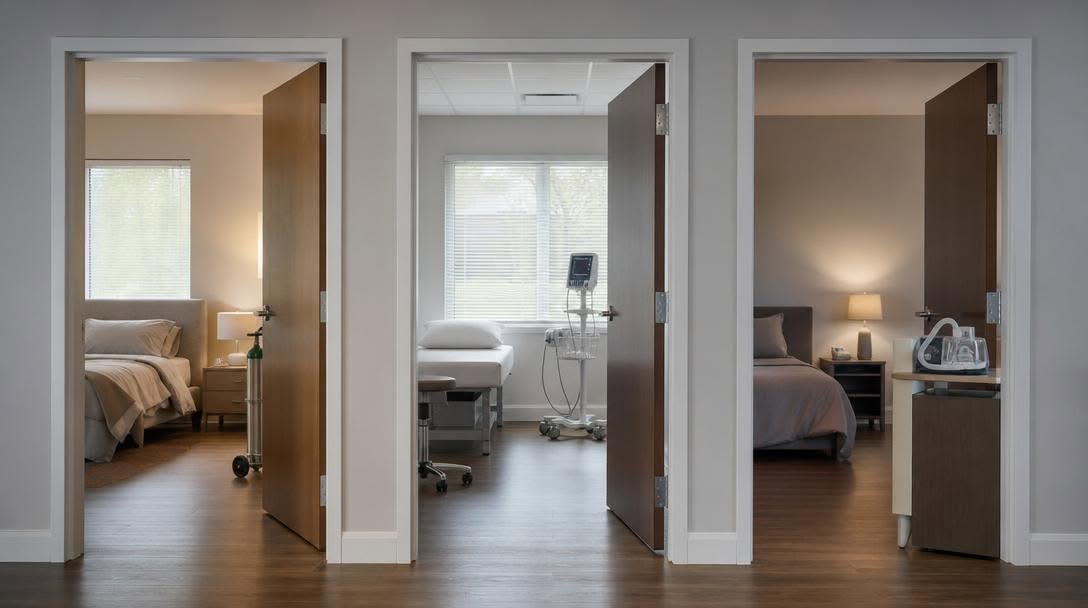
Short answer to a question we hear often: the device gets fitted here at our clinic on Main Street in Sussex, and you wear it at home overnight. No sleeping in a lab, no hospital stay, no two-hour drive.
Here's how it goes. Your family doctor sends a referral, typically through the Sussex Health Centre, and we book you in for a brief daytime appointment. That visit usually takes about fifteen minutes. We show you how the pulse oximeter goes on your finger, walk you through what to expect, and make sure you're comfortable with the device before you leave.
That night, you sleep in your own bed.
The oximeter records your blood oxygen level and pulse rate continuously through the night. Most recordings run six to eight hours. When you wake up, you simply bring the device back to us. From there, our team pulls and reviews the data, and the results go back to your referring physician, usually within a few business days. If your doctor is in Sussex, Sussex Corner, Norton, or the surrounding area, that turnaround tends to be straightforward.
No overnight stay. No commute to Moncton or Saint John. For most people in Kings County, the whole process from daytime fitting to results in your doctor's hands takes about a week. Call us at (506) 434-7667 if you have questions about timing or what to expect on the day you come in to pick up the device.
Once your referring physician has those numbers, the real decisions start.
What the Results Unlock — Home Oxygen, Sleep Studies, or CPAP Next Steps

Three doors. Depending on what the oximetry report shows, your referring physician has a clear path to walk through one of them, and sometimes more than one.
If your SpO2 dropped below 88% for more than 30% of a minimum four-hour recording, you meet the threshold New Brunswick uses to qualify for home oxygen therapy. That number isn't arbitrary. It's the documented standard the province requires before approving coverage. Without a nocturnal oximetry study on file, the application doesn't move forward. For clients dealing with chronic lung conditions or severe untreated sleep apnea, this result can be the piece that finally gets oxygen equipment into the home.
Oximetry isn't always the final step, though. For many people, it's a screening tool, a way to flag whether the overnight breathing pattern warrants a closer look through sleep disorder diagnosis and testing or a full in-lab sleep study. If your oxygen levels dipped repeatedly through the night, that pattern often points toward obstructive sleep apnea, and a polysomnogram or home sleep test gives the detail needed to confirm a diagnosis. From there, a CPAP consultation becomes the natural next conversation.
Results that come back closer to normal aren't necessarily the end of the road either. Your physician reads them alongside your symptoms and history. The numbers are one piece of a larger picture.
Why Sussex-Area Clients Are Referred for Overnight Oximetry

Kings County runs on shift work. The potash mine, the natural gas operations, the dairy farms spread across Norton, Penobsquis, and Apohaqui, these are physical jobs where being well-rested is not optional. A worker running heavy equipment on four hours of fragmented sleep is a safety risk. Families know it. Employers know it. Family physicians know it too, and it shows up in their referral patterns.
The Sussex Health Centre on Leonard Drive is the referral hub for this catchment area. Doctors across Sussex, Sussex Corner, and the surrounding communities send overnight oximetry orders through it regularly. Roughly 30,000 people live in Kings County, and a real share of them are in age groups and occupations where sleep-disordered breathing is common and underdiagnosed.
Winter pushes the numbers higher.
Cold air and the dry indoor heat that comes with it across the Kennebecasis Valley can aggravate nighttime breathing symptoms noticeably. The November through March window tends to bring a steady increase in referrals, as clients who have been managing marginal symptoms through warmer months find they can't anymore.
That mix of shift workers, aging rural residents, and seasonal respiratory stress creates real, consistent demand for a local overnight oximetry option. Which brings us to what the clinic on Main Street can actually offer, and how straightforward it is to get started.
Booking Your Nocturnal Oximetry Study in Sussex
A referral from your family doctor is all it takes to get started. Once your physician submits the referral, whether you're coming from Sussex Corner, Norton, Apohaqui, Penobsquis, or anywhere else in the Kennebecasis Valley, our team will reach out to schedule your study and walk you through what to expect.
The process is simple. You'll pick up the oximetry device from East Coast Sleep Clinic – Sussex on Main Street, wear it overnight at home, and return it the next morning. No overnight stay, no long wait in a hospital corridor.
Call East Coast Sleep Clinic – Sussex at (506) 434-7667 and have your referral number and health card information ready. We're glad to answer questions before your appointment, about the test itself, the results, or what comes next. If calling isn't convenient right now, you can also reach us through the contact form on our website and we'll follow up promptly.
If you've got a referral in hand and you're anywhere between Penobsquis and Norton, the clinic on Main Street is the closer, simpler answer. Why drive 80 kilometres when the same study is available right here in Sussex?
Frequently Asked Questions
What is overnight oximetry?
Overnight oximetry is a simple screening test where a small clip-on sensor worn on your fingertip records your blood oxygen saturation (SpO2) and heart rate while you sleep. There are no wires across your chest and no clinic stay — you sleep in your own bed at home. The recorded data helps your referring physician assess whether your airway is causing disruptions to your breathing overnight.
What SpO2 level indicates sleep apnea?
Healthy blood oxygen typically sits between 95% and 100% during sleep. Repeated drops below 90% overnight — particularly when paired with a high Oxygen Desaturation Index (ODI) — can point toward sleep-disordered breathing such as sleep apnea. Your referring physician reviews the full overnight pattern to determine what the numbers mean for your specific situation.
Do I need a physician referral for nocturnal oximetry in Sussex?
Yes, a referral from your family physician or a specialist is required before booking an overnight oximetry study at East Coast Sleep Clinic – Sussex. Once the study is complete, the results are sent directly back to your referring doctor, who will walk you through next steps.
Is nocturnal oximetry the same as a sleep study?
No — they are different tests. Overnight oximetry is a screening tool that measures blood oxygen and heart rate only, and you complete it at home. A full sleep study (polysomnogram) records brain activity, eye movement, muscle activity, and breathing effort and is typically conducted in a hospital sleep lab. If your oximetry results are abnormal, a full sleep study is often the recommended next step.
Can overnight oximetry qualify me for home oxygen therapy in New Brunswick?
Yes. The New Brunswick home oxygen program requires a documented nocturnal oximetry study showing SpO2 below 88% for more than 30% of a minimum four-hour overnight recording. Without that documented study on file, an application for provincial home oxygen support cannot move forward. East Coast Sleep Clinic – Sussex can complete this study for clients who have a referral in hand.
More Sussex Sleep Services
- East Coast Sleep – Sussex
- Adult Sleep Assessment in Sussex, NB
- Fatigue Evaluation in Sussex, NB
- Home Sleep Testing in Sussex, NB
- Medical Equipment Supplier in Sussex, NB
- Portable & Travel Sleep Study Services in Sussex, NB
- Sleep Monitoring for Heart Patients in Sussex, NB
- Sleep Study in Sussex, NB (In-Lab Polysomnography)
- Sleep Tracking & Monitoring in Sussex, NB