What Your Fitbit, Apple Watch, or Oura Ring Is Actually Telling You
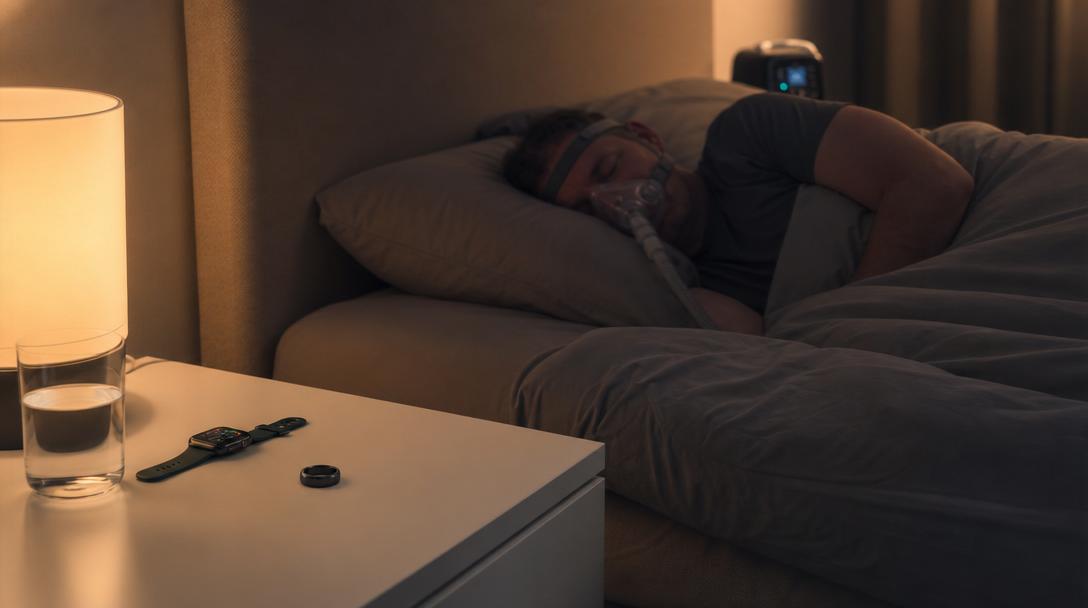
There's a version of that sleep score conversation that happens in a lot of Sussex homes: the numbers look bad, you decide it's probably just a rough night, and you move on. When that explanation stops holding up week after week, the tracker has done its job, and the next step is one it cannot take for you.
That question is worth taking seriously.
Consumer sleep trackers do something genuinely useful: they catch patterns over time. A week of poor sleep scores, repeated low oxygen alerts, or a consistently elevated resting heart rate are real signals that something is off. The long, dark winters in the Kennebecasis Valley already push a lot of locals to check their tracker data more closely. Circadian disruption is real here, and wearables often pick it up before you consciously notice it.
What they can't do is tell you why. Fitbit, Apple Watch, Oura, and Garmin all estimate sleep stages from motion and heart rate. They're not reading brain activity, measuring airflow, or tracking the kind of breathing interruptions that define sleep apnea. So when your watch flags an oxygen dip, it's pointing at something. It just doesn't have the tools to explain what.
Trends are one thing. When those trends keep repeating, they deserve a closer look than any wearable can give you. If that's where you are, call East Coast Sleep Clinic – Sussex at (506) 434-7667. We'll walk you through exactly what a clinical evaluation involves and whether it makes sense for what you're seeing.
What Consumer Wearables Miss (And What Clinical Sleep Tracking Adds)
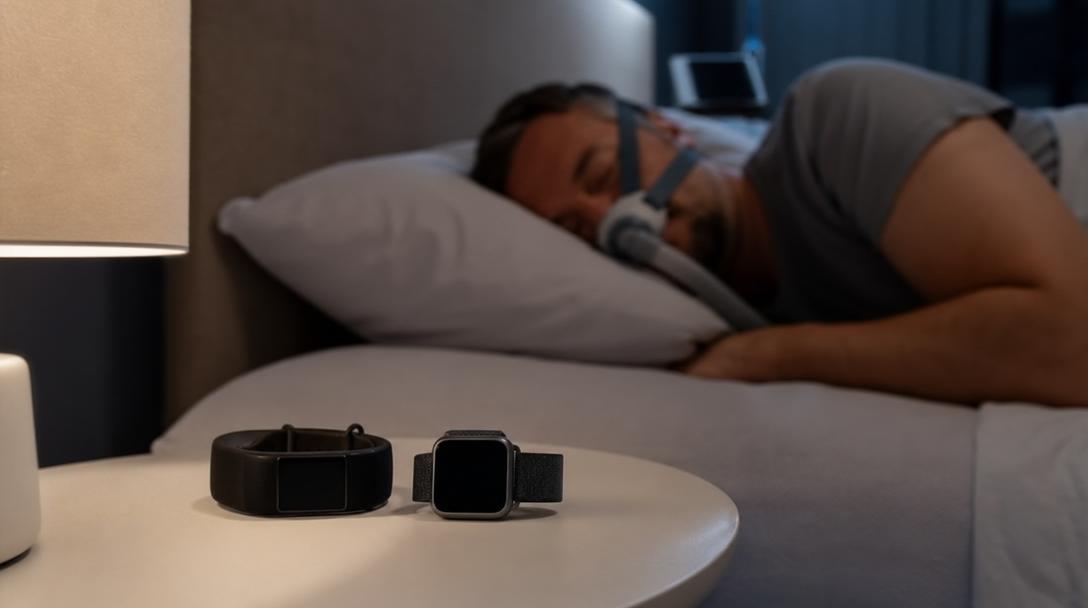
Your Fitbit knows you moved around at 2 a.m. Your Apple Watch noticed your heart rate climbed. What neither can tell you is why.
Consumer trackers work from the outside in: motion, heart rate, and occasionally a rough SpO2 reading from a wrist-based optical sensor. That oxygen reading is the one that tends to send people searching for answers, and understandably so. But a notification that says "oxygen dropped to 89%" is very different from a clinician reviewing exactly how many times your breathing paused, for how long, and how fully you recovered each time.
Clinical sleep monitoring devices measure what's actually happening in your airway. Airflow sensors at the nose and mouth detect whether air is moving at all. Respiratory effort belts around the chest and abdomen show whether your body is trying to breathe even when it can't. Continuous pulse oximetry tracks oxygen second by second, not as an overnight average. A trained technician then scores every event, producing an Apnea-Hypopnea Index: a count of breathing disruptions per hour that tells you whether you're looking at five events (mild) or forty (severe).
That's the number that changes what happens next.
Shift workers at local dairy operations and trucking companies across Kings County can't afford to manage a serious sleep disorder on guesswork. So when do those wearable trends cross the line from "interesting data" to "time to call someone"?
When to Stop Trusting Your Tracker and Book a Clinical Evaluation
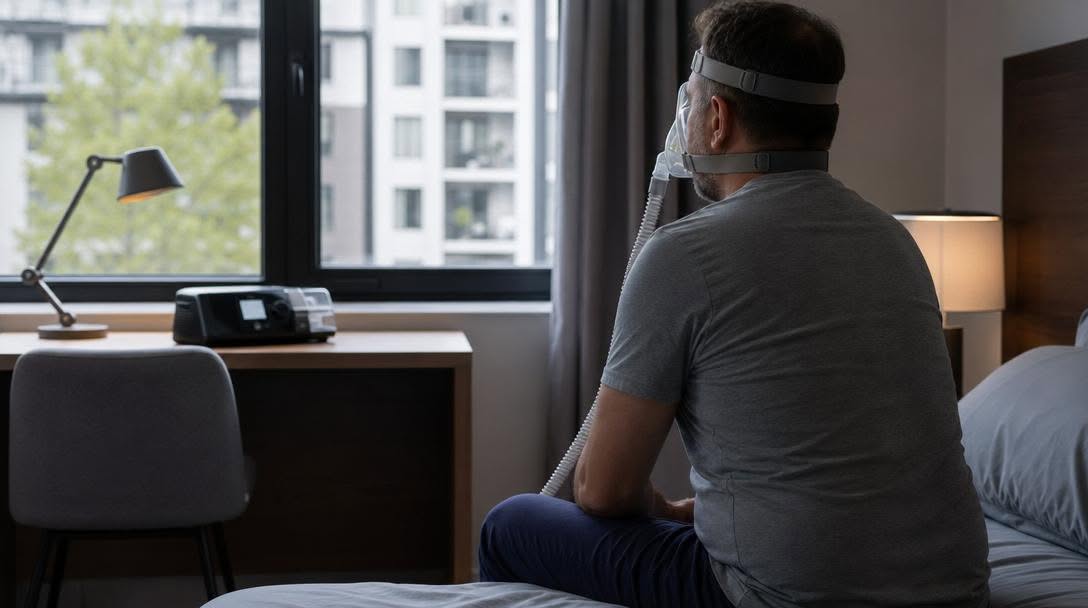
Your tracker flagged something. Now what?
Some patterns belong in the "keep an eye on it" category. Others warrant a conversation with a clinician. The difference matters.
Book a professional sleep quality evaluation if you're seeing any of these:
- Oxygen dips showing up repeatedly. A single low reading can be a fluke, a loose band, a restless roll. Repeated dips below 90% on consecutive nights are something else. That's your body telling you it's not breathing well while you sleep, and a wristband is not the right tool to investigate why.
- Weeks of fragmented sleep that better habits haven't fixed. You've cut the caffeine. You go to bed at the same time. It's still broken. That's not a sleep hygiene problem.
- Snoring picked up by your device's microphone, combined with poor recovery scores. Loud, irregular snoring alongside low HRV and high resting heart rate is a pattern worth taking seriously.
- Daytime fatigue that sleep isn't fixing. Logging seven or eight hours and still dragging through the afternoon? The hours aren't the issue.
For shift workers at local dairy operations, Sussex Health Centre, or in trucking, this gets harder to read. Irregular schedules create naturally noisy data, which makes it easy to dismiss real warning signs as schedule noise.
If any of those patterns sound familiar, call East Coast Sleep Clinic – Sussex at (506) 434-7667, or keep reading to find out what a clinical evaluation actually involves and why you won't need to get on Route 1 to Moncton to get there.
How Clinical Sleep Tracking Works at East Coast Sleep Clinic – Sussex
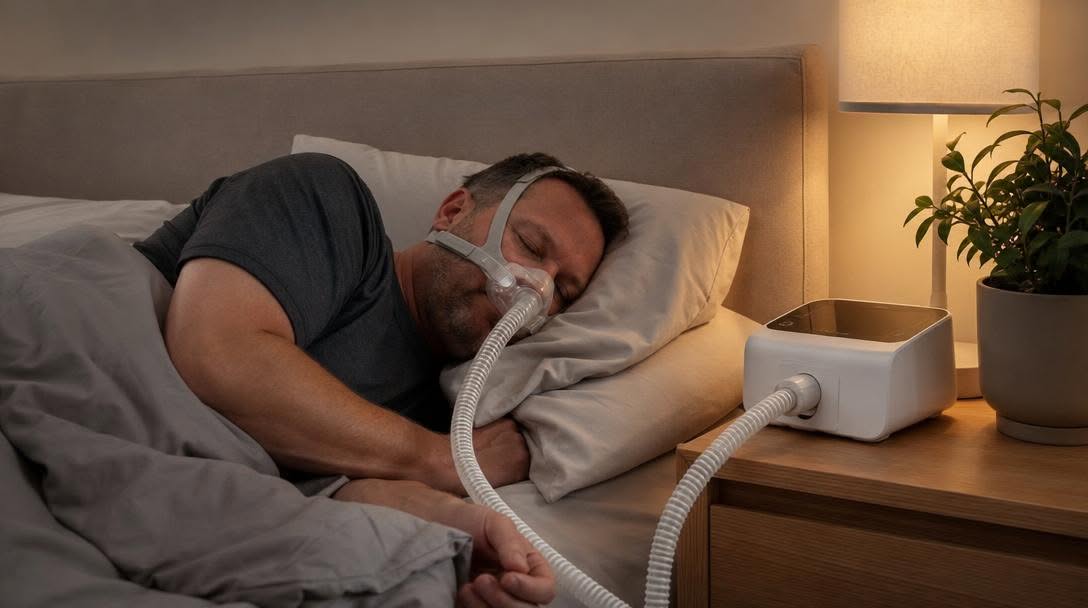
Starting the process is simpler than most people expect.
The first step is a consultation, a conversation about your sleep history, your symptoms, and yes, what your wearable has been showing you. That Fitbit data or those Apple Health graphs aren't dismissed here. They're a useful starting point for understanding what's been happening while you sleep.
From there, the team at East Coast Sleep Clinic – Sussex will recommend the tracking method that fits your situation. For many people, home sleep testing is the right call. You pick up a small monitoring device, wear it overnight in your own bed, and return it the next morning. No unfamiliar room, no wires you have to manage alone. For more complex cases, an in-lab study provides a fuller picture, measuring brain activity, oxygen levels, heart rate, breathing effort, and body movement all at once. If oxygen monitoring is the main concern, a targeted nocturnal oxygen study may be arranged instead.
Once your overnight data is collected, a registered clinician scores and interprets it. This is the part your Fitbit genuinely cannot do. A trained eye reads the raw data the way it needs to be read, identifying patterns that algorithms miss and ruling out things trackers frequently flag incorrectly.
Results are reviewed with you directly, in plain language. East Coast Sleep Clinic – Sussex offers service in both English and French, so that conversation happens comfortably, in whichever language works best for you.
One of the biggest reasons people put this off is the drive. Here's why that no longer applies.
Sleep Care Right in Sussex — No Drive to Moncton or Saint John
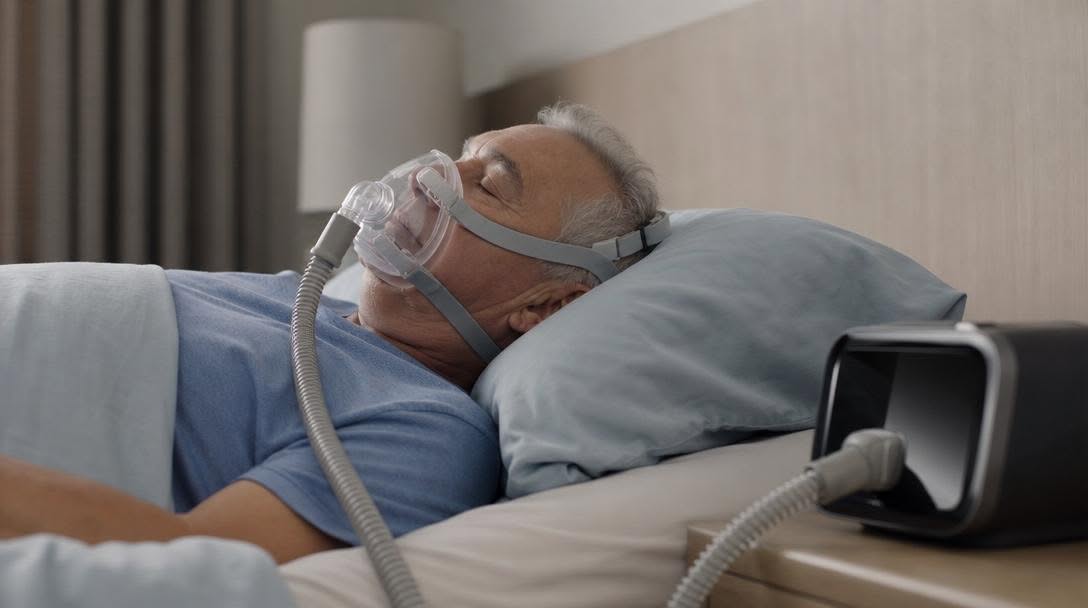
Sussex sits almost exactly halfway between Saint John and Moncton on Route 1. For a long time, that geography meant a 50-mile drive in either direction every time someone needed clinical sleep care.
Most people put it off. Hard to blame them.
That's changed. East Coast Sleep Clinic – Sussex is located at 20 Kennedy Drive, just steps from the Sussex Health Centre. If you live in town, you can walk. If you're coming in from Penobsquis, Apohaqui, Norton, Sussex Corner, Hampton, or anywhere else in Kings County, this is your closest option for real sleep care, not a Horizon Health facility an hour down the highway.
No drive to Moncton. No drive to Saint John. Everything required to move from wearable data to a confirmed clinical picture is available right here in Sussex.
East Coast Sleep Clinic – Sussex also serves the bilingual communities across the region. Comfortable in French? We work in both languages.
Once the clinical tracking is complete, the data needs to do something useful. The next step is where it all comes together.
What Happens After the Data Comes In
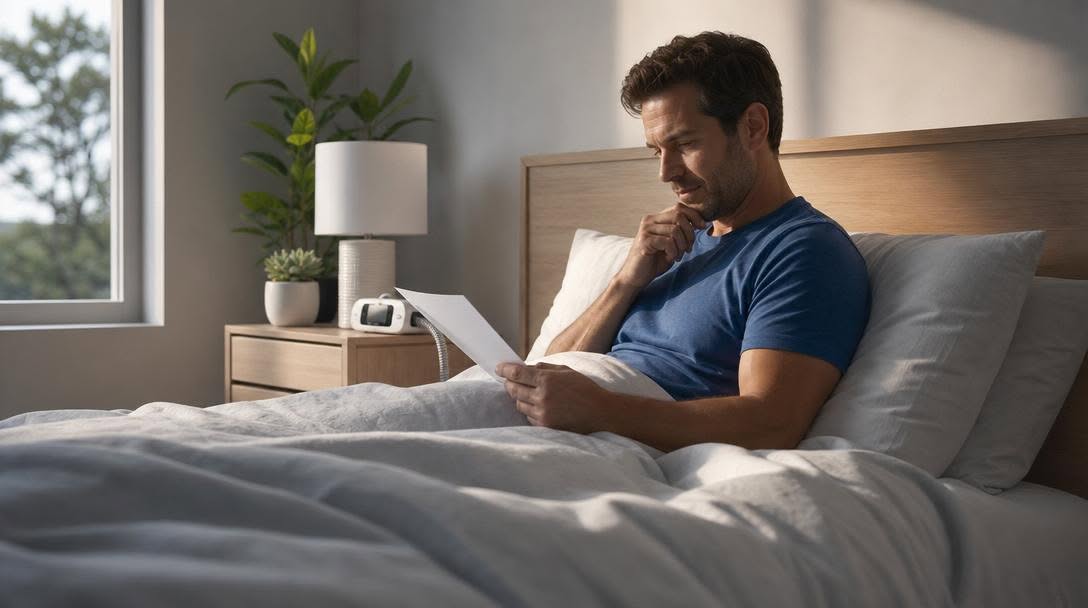
Getting the results is where things start to feel real.
A clinician at East Coast Sleep Clinic – Sussex will walk you through what the data actually shows, in plain language, not a wall of numbers. If the tracking confirms sleep apnea diagnosis, you'll know your severity, what's been happening to your oxygen levels overnight, and what comes next.
For many people, that next step is CPAP therapy. It's not as complicated as it sounds, and the team at East Coast Sleep Clinic – Sussex will help you get set up properly. One thing that catches a lot of Sussex residents off guard in the first winter with a CPAP: the cold, dry air in the Kennebecasis Valley can make the machine feel harsh overnight. That discomfort shows up as fragmented sleep on wearables, which means your tracker starts flagging a comfort issue and calling it a breathing one. Humidity settings matter, and the clinic helps you dial those in.
Follow-up monitoring is part of the picture too. The data from your CPAP gets reviewed as treatment continues, which means care does not stop the day you pick up the machine. If you live in Sussex or anywhere in Kings County and those tracker alerts have been adding up week after week, East Coast Sleep Clinic – Sussex is your next call at (506) 434-7667. If calling isn't the right moment, the contact form on this page works just as well. Either way, that wearable data you've been collecting is worth something. Let's find out what it's actually telling you.
Frequently Asked Questions
Are Fitbit, Apple Watch, and Oura sleep trackers accurate?
Consumer wearables are reasonably good at spotting trends and estimating total sleep time over weeks and months. What they can't do reliably is identify sleep stages or detect apnea events — they're estimating from motion and heart rate, not measuring airflow or brain activity. Think of them as a useful signal that something may be worth looking into, not a diagnosis you can act on.
My watch keeps showing oxygen drops at night — should I be worried?
Recurring oxygen dips are worth taking seriously. A single low reading can be a fluke — a loose band, a restless roll — but if your device is flagging drops on consecutive nights, that's a pattern, not noise. Wearable SpO2 isn't diagnostic, but repeated dips below 90% often point to breathing disruptions during sleep that a clinical evaluation can properly identify and measure.
Do I have to drive to Moncton or Saint John for a sleep study?
No. Clinical sleep tracking is available right in Sussex at East Coast Sleep Clinic – Sussex, 20 Kennedy Drive. Whether you need a home sleep test or a more detailed in-lab study, you don't have to get on Route 1 to get answers.
What's the difference between my tracker's data and what you measure clinically?
Your wearable estimates from the outside — motion, heart rate, and an occasional wrist-based oxygen reading. Clinical sleep tracking measures what's actually happening in your airway: airflow at the nose and mouth, respiratory effort from chest and abdomen belts, and continuous pulse oximetry second by second. A registered clinician then scores every breathing event and produces an Apnea-Hypopnea Index — the number that tells you whether you're looking at a mild issue or something that needs treatment.
How long does the whole process take from first call to results?
For most people, the process involves a consultation, one overnight tracking session, and a results review — typically completed within a couple of weeks depending on scheduling. Home sleep tests move quickly since you do the overnight portion in your own bed and return the device the next morning. The team at East Coast Sleep Clinic – Sussex will walk you through the timeline after your initial conversation.
More Sussex Sleep Services
- East Coast Sleep – Sussex
- Adult Sleep Assessment in Sussex, NB
- Fatigue Evaluation in Sussex, NB
- Home Sleep Testing in Sussex, NB
- Medical Equipment Supplier in Sussex, NB
- Nocturnal Oxygen Monitoring in Sussex, NB
- Portable & Travel Sleep Study Services in Sussex, NB
- Sleep Monitoring for Heart Patients in Sussex, NB
- Sleep Study in Sussex, NB (In-Lab Polysomnography)