An Overnight Sleep Study, Right Here in Sussex
Plenty of people across Kings County have sat on a sleep study referral for months because a round trip to Moncton or Saint John is genuinely hard to schedule around a real life. That's no longer the obstacle it was. We offer in-lab polysomnography right here at 20 Kennedy Drive, just off Main Street in the heart of town — through East Coast Sleep Clinic – Sussex.
This study is for adults who snore heavily, wake up exhausted no matter how many hours they sleep, or have been told by a partner that they stop breathing in the night. It is also the study a family doctor will refer you for when they suspect sleep apnea and need a confirmed diagnosis before treatment begins.
One night at our clinic is all it takes to get that answer.
New Brunswick Medicare covers diagnostic sleep studies when ordered through a physician referral. Most of our clients pay nothing out of pocket for the test itself. Not sure whether you qualify or how the coverage applies to your situation? Call us at (506) 434-7667 and we'll sort it out before you commit to anything.
In-lab polysomnography is the gold standard for diagnosing sleep apnea, and knowing what it actually involves makes the whole process feel a lot less daunting. Let's go through it.
What an In-Lab Polysomnography Actually Measures
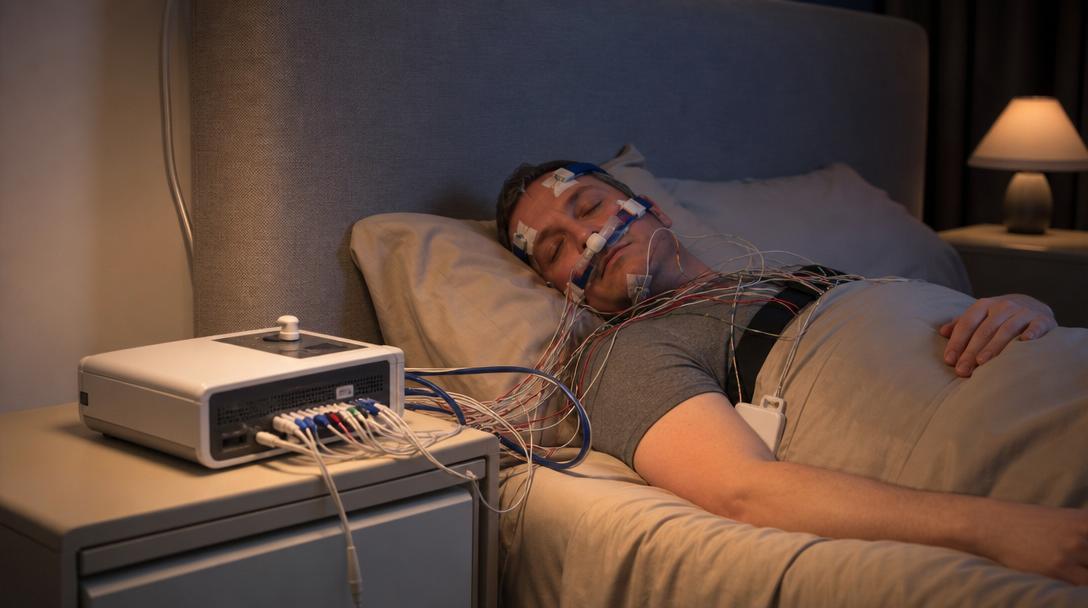
Think of polysomnography as your body telling its own story overnight, with the sensors simply listening.
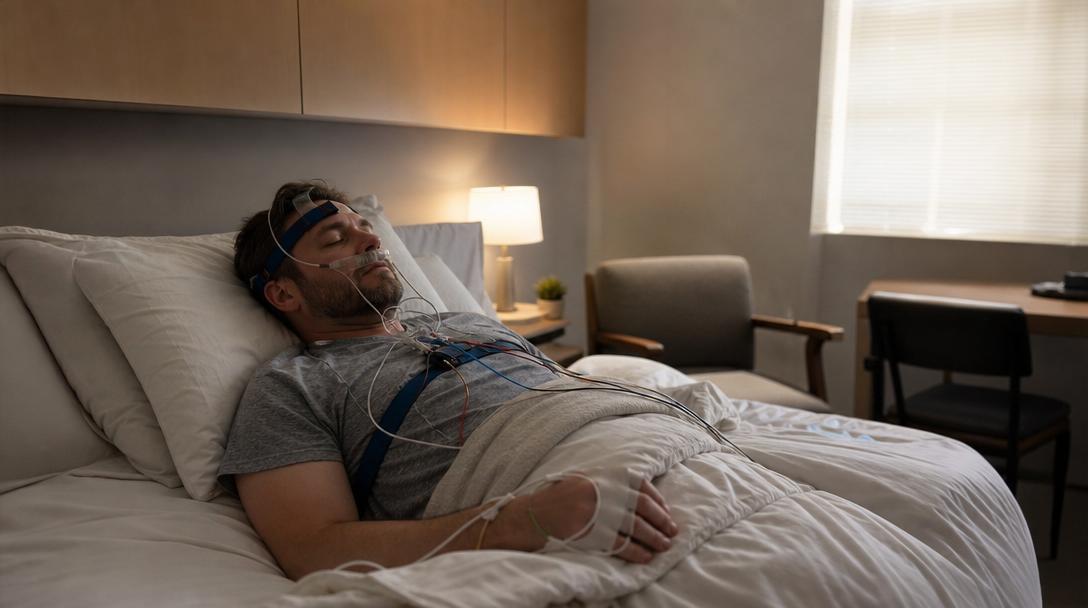
When you arrive at East Coast Sleep Clinic – Sussex, a sleep technologist places a series of small sensors on your skin using a gentle, water-based adhesive. Nothing pierces, nothing pinches. The whole setup takes about 30 to 45 minutes, and most people are surprised by how comfortable it feels once everything is in place.
Here is what each sensor is tracking.
EEG (electroencephalogram): small electrodes on your scalp pick up brain wave activity, which tells the sleep team which stage of sleep you're in at any given moment: light, deep, or REM.
EOG (electrooculogram): sensors near your eyes detect eye movement. This is how the team confirms when you've entered REM sleep, the stage most closely linked to dreaming and airway relaxation.
EMG (electromyogram): electrodes on your chin and legs measure muscle tone. Leg sensors catch periodic limb movements, which can break up sleep just as much as breathing disruptions can.
ECG (electrocardiogram): a sensor on your chest records heart rhythm throughout the night.
Airflow sensors: positioned near your nose and mouth, these measure whether air is moving freely with each breath.
Effort belts: soft bands around your chest and abdomen track breathing movement, showing whether your body is working harder than it should to pull in air.
Pulse oximetry: a small clip on your finger monitors blood oxygen levels continuously.
Together, these readings give your care team a detailed, hour-by-hour picture of your night. It's a lot of data. And that's exactly the point. For a broader look at what this process involves, our sleep disorder diagnosis and testing page covers how different studies fit together.
If you have questions about the sensor setup or what the overnight actually feels like, our team can walk you through it. Most questions get answered in a single conversation.
What to Expect the Night of Your Sleep Study
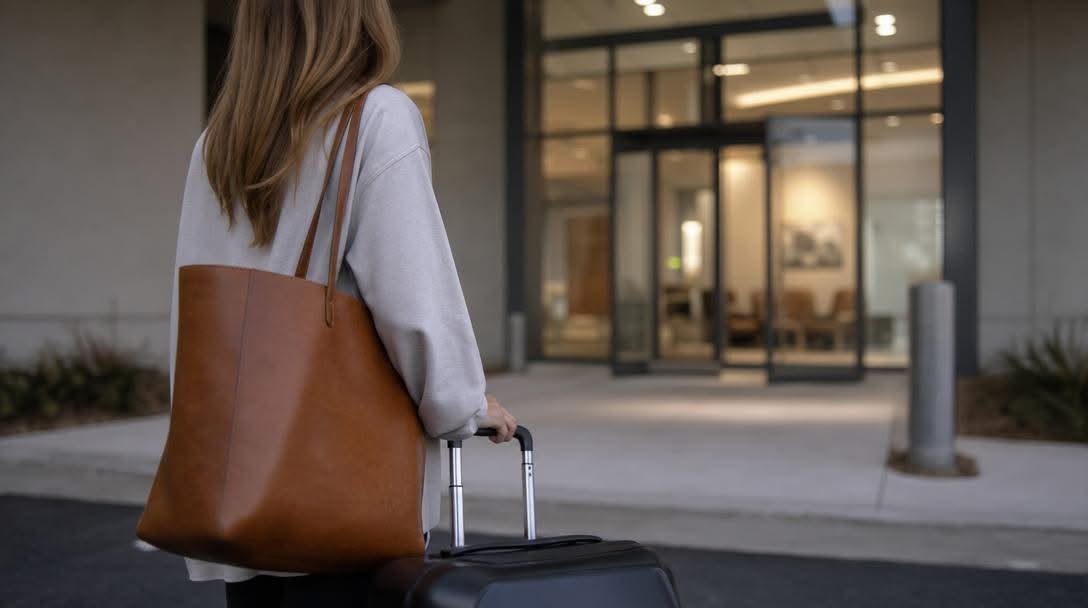
Most people arrive at 20 Kennedy Drive feeling a little uncertain about what the next twelve hours will look like. That's completely normal.
Here's exactly how the night unfolds.
You'll come in around 8:00 or 9:00 in the evening. We'll get you settled into your private room (think a comfortable bedroom, not a clinical bay) and you'll change into your own pajamas. Bringing what you normally wear to bed makes a real difference. Familiar things help.
Sensor setup takes roughly 45 minutes. A technologist will attach leads to your scalp, chest, and legs, along with a small clip on your finger to track oxygen levels. None of it hurts. Most people are surprised by how quickly they stop noticing the sensors once they're lying down. When you feel ready to sleep, we turn the lights out. There's no clock to beat.
From a separate room, a technologist monitors your readings throughout the night. You won't be alone, but you won't be disturbed either, unless something needs a quick adjustment.
We'll wake you around 6:00 or 7:00 in the morning. Sensors come off in minutes, and there's no complicated discharge process. Most people are out the door and on their way home along Route 1 well before the morning commute picks up, with plenty of time to make it back to Norton, Hampton, or Petitcodiac before the day really starts.
Knowing what the night looks like is half the preparation. The other half is what you do before you arrive. Not sure whether an in-lab study is the right fit for you? Our page on home sleep testing in Sussex explains when that option makes more sense.
How to Prepare for Your Sleep Study
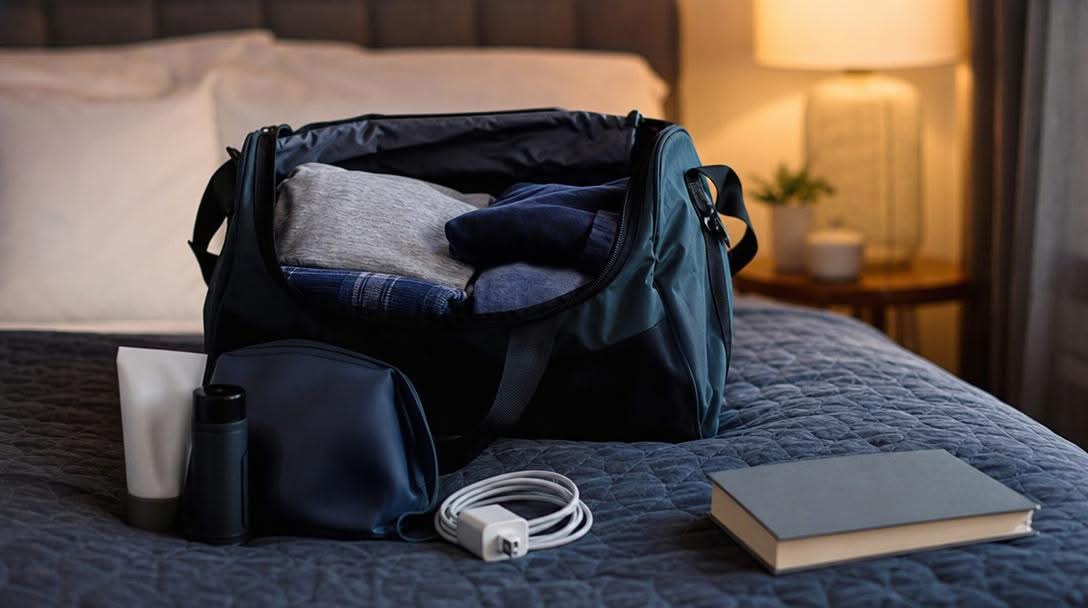
Pack an overnight bag the way you would for any short stay: comfortable pajamas, your usual toiletries, a phone charger, and a book or something to read if it takes you a while to wind down. The environment is quiet and calm, but familiar comforts help.
Hair care matters more than most people expect. Wash and dry your hair the day of the study and leave out any products. Gels, oils, sprays, and dry shampoo all interfere with the sensors we place on your scalp. Clean, dry hair makes for cleaner data.
A few things to avoid on the day: skip caffeine after noon, eat a normal dinner, and hold off on napping. Take your regular medications as usual unless your referring doctor has specifically told you otherwise. Bring a written list of everything you're currently taking, because our team will want to see it.
For clients driving in from Hampton, Petitcodiac, or anywhere across Kings County, plan to arrive on time. There's a setup window before the study begins, and a late start compresses it.
If you have a question we haven't covered here, our team at East Coast Sleep Clinic – Sussex is easy to reach. Most concerns turn out to be simpler to sort out than people expect.
Those logistics lead to the two questions we hear most often before booking.
Do You Need a Referral, and How Long Does It Take?

For most people, yes. A referral from your family doctor or nurse practitioner is the starting point. That one step matters more than it might seem, because it's also what triggers your eligibility for New Brunswick Medicare coverage. Your doctor reviews your symptoms, writes the referral, and we take it from there. Many of our clients in Kings County have a long-standing relationship with their family doctor, which often makes this conversation quicker than you'd expect.
Once your referral is in and your study is scheduled, plan for a full overnight commitment. Most people arrive at our clinic on Kennedy Drive between 8:00 and 9:00 PM and are discharged the following morning around 7:00 or 8:00 AM, roughly 10 to 11 hours from door to door. You'll sleep in your own private room. Our team handles all the setup before you turn in for the night.
After the study, the recorded data gets scored by a sleep specialist. Then we schedule a follow-up appointment to walk you through the results and talk about next steps.
That brings us to the question almost everyone asks right alongside the referral question: what does this actually cost?
Cost and New Brunswick Medicare Coverage

Here's where things look very different from what you might read on a US health website.
In New Brunswick, an in-lab polysomnography ordered by your family doctor and deemed medically necessary is typically covered under NB Medicare. Most Kings County residents going through the referral pathway pay nothing out of pocket for the diagnostic overnight study itself. Your family doctor's referral is what triggers that coverage, which is one more reason getting that conversation started early matters.
Private-pay options do exist. If you don't have a referral or prefer to schedule on your own timeline, our team can walk you through what that looks like. Costs vary and can change, so we don't publish a price list that might be out of date by the time you read it.
The honest answer to "what will this cost me?" is simple: call us at (506) 434-7667 and we'll tell you exactly where you stand. It's a short conversation. You'll leave it knowing what to expect, whether you're coming through Medicare or booking privately.
Getting Your Results and What Comes Next

The night doesn't end with your departure the next morning. It ends when someone who knows what they're looking at has reviewed every signal your body produced while you slept.
After your study at East Coast Sleep Clinic – Sussex, a registered sleep technologist scores the raw data first, measuring your AHI (apnea-hypopnea index), cataloguing oxygen dips, flagging leg movement events, and organizing your sleep stage breakdown. That scored record then goes to a sleep physician for clinical review. From the night of your study to a completed report, plan for roughly two to four weeks.
Once the report is ready, we'll walk you through it together.
Your AHI score tells us how many times per hour your breathing was disrupted, and what that number means shapes everything about what comes next. If sleep apnea diagnosis is confirmed, the path forward typically starts with a CPAP therapy trial and a mask fitting. Both happen right here in Sussex, at 20 Kennedy Drive, so you're not adding another long drive into the mix. Follow-up care continues locally as well, which means your treatment doesn't stop at a diagnosis.
The entire journey, from referral through overnight study to results and therapy, is designed to stay close to home.
When you're ready to take the first step, booking is straightforward.
Book Your Sleep Study in Sussex

You don't have to drive to Moncton or Saint John for this. East Coast Sleep Clinic – Sussex is right here in town, at 20 Kennedy Drive, easy to find, just off Main Street.
We serve clients from across Kings County: Sussex, Sussex Corner, Penobsquis, Apohaqui, Norton, Hampton, Petitcodiac, and the communities in between. If you've been putting off a sleep study because the distance felt like too much, that reason is gone.
Call us at (506) 434-7667 to book your in-lab polysomnography or to ask a few questions before you commit. If you'd rather start with a message, use the contact form on this page and we'll get back to you, usually within the same business day.
Frequently Asked Questions
What happens during a sleep study?
You arrive at the clinic in the evening, get settled into a private room, and a sleep technologist spends about 45 minutes attaching small sensors to your scalp, chest, and legs. From there, you sleep while the sensors quietly record your brain activity, breathing, oxygen levels, and more. In the morning, a technologist removes everything and you're on your way home — most people are out the door well before 7:30 a.m.
How long does a sleep study take?
Plan on roughly 10 to 11 hours from arrival to discharge. You'll come in around 8:00 or 9:00 in the evening and be released around 6:00 or 7:00 the next morning. The sensor setup itself takes about 45 minutes — the rest of the time is yours to sleep.
How much does a sleep study cost in New Brunswick?
When ordered through a physician or nurse practitioner referral and deemed medically necessary, in-lab polysomnography is typically covered under New Brunswick Medicare — most of our clients pay nothing out of pocket for the study itself. Private-pay options are also available. Call East Coast Sleep Clinic – Sussex directly and we'll walk you through what applies to your situation before you commit to anything.
Do I need a referral for a sleep study in Sussex?
Most in-lab sleep studies begin with a referral from a family doctor or nurse practitioner. That referral is also what opens NB Medicare coverage, so it's worth getting one if you haven't already. If you're unsure where to start, our team at East Coast Sleep Clinic – Sussex can point you in the right direction.
How soon will I get my sleep study results?
After your overnight study, the raw data is scored and reviewed by a sleep physician. You'll typically receive your results at a follow-up appointment within two to four weeks. That review appointment is where your care team will walk you through what the study found and talk through next steps if treatment is recommended.
More Sussex Sleep Services
- East Coast Sleep – Sussex
- Adult Sleep Assessment in Sussex, NB
- Fatigue Evaluation in Sussex, NB
- Home Sleep Testing in Sussex, NB
- Medical Equipment Supplier in Sussex, NB
- Nocturnal Oxygen Monitoring in Sussex, NB
- Portable & Travel Sleep Study Services in Sussex, NB
- Sleep Monitoring for Heart Patients in Sussex, NB
- Sleep Tracking & Monitoring in Sussex, NB